How can career centers build employer partnerships that drive better student outcomes?
Career centers can improve student outcomes by building a structured employer partnership model that prioritizes high-value partners, tiers relationships by strategic importance, creates year-round engagement opportunities, and tracks outcomes tied directly to internships, interviews, and hires. This shifts employer relations from fragmented outreach to a measurable, institutionally valuable system.
Most career centers still rely on fragmented employer outreach - career fairs, inbound requests, and one-off partnerships, without a clear strategy to prioritize or deepen relationships.
The result is broad employer networks but limited impact on actual student outcomes.
This becomes an institutional challenge as leadership expects career services to demonstrate measurable ROI - connecting employer engagement to internships, hires, and long-term success.
Without structured partnerships and outcome tracking, it’s difficult to justify resources or align efforts with academic priorities.
This guide outlines how to build a strategic employer partnership model - from identifying high-value partners and tiering relationships to driving year-round engagement and tracking outcomes that matter.

How Can Career Centers Identify High-Value Employer Partners?
Career centers can identify high-value partners by shifting from an opportunistic model to a targeted, data-backed approach. This requires analyzing first-destination survey data, regional labor market trends, and alignment with institutional academic strengths to proactively build a target list, rather than just responding to inbound requests from employers.
This strategic pivot moves the focus from quantity of interactions to quality of partnerships.
Instead of chasing every lead, CSPs should prioritize employers with a proven history of hiring graduates, strong alignment with key academic programs, and high student interest.
According to the Urban Institute’s Employer Perspectives Study, such deep collaborations can increase student job placement rates by as much as 35%.
You can review the complete findings on these strong employer-college partnerships. To build a target list, start with:
- First-Destination Data: Identify companies consistently hiring multiple graduates, not just one-offs.
- Labor Market Analysis: Use resources like the Bureau of Labor Statistics to pinpoint high-growth industries and roles relevant to your region and student population.
- Academic Program Alignment: If your university excels in specific fields like engineering or public health, your priority partners should reflect those strengths. This ensures a natural fit between student skills and employer needs, and is crucial for meeting what recruiters expect from career centers.
Also Read: 5 Tips to Build Employer Partnerships for College Career Treks

How Should Career Centers Structure Partnership Tiers?
A tiered model segments employers based on their level of engagement and strategic value, allowing career centers to allocate resources effectively. Instead of a one-size-fits-all approach, this structure provides a clear framework for managing relationships, ensuring high-touch efforts are reserved for partners offering the greatest impact on student outcomes.
Most institutions use a three-tier system to manage their portfolio:
- Tier 1 (Strategic Partners): These premier partners are deeply integrated with the university. They may co-develop curriculum, fund special programs, offer extensive work-based learning, and sit on advisory boards.
- Tier 2 (Engaged Partners): This core group consistently recruits on campus, hosts targeted events, and posts exclusive opportunities for students. They have a designated university relations contact and seek regular engagement.
- Tier 3 (Transactional Partners): These partners have a more limited relationship, typically engaging through general job boards and annual career fairs. Support for this tier is often automated to preserve staff capacity.
The University of Virginia’s 'Employer Partner Programs' offers a strong example of this in practice.
They clearly define the benefits and expectations for each tier, creating a transparent "ladder of engagement" that incentivizes deeper collaboration.
This structure helps manage staff workload and demonstrates a clear strategy to university leadership.
Also Read: 5 Proven Strategies to Boost Student Engagement in Career Treks
How Can Employer Engagement Move Beyond Career Fairs?
To deepen relationships, career centers must create a year-round calendar of engagement opportunities that integrate partners into the campus ecosystem. This moves the relationship from transactional to transformational by providing continuous value to employers, students, and faculty outside of the traditional recruiting season.
A 2025 UPCEA snap poll revealed that 53% of institutions now have staff dedicating at least half their time to employer partnerships, signaling a systemic shift toward more integrated models.
This trend is detailed in the UPCEA report on building strong employer partnerships.
Effective year-round engagement tactics include:
- Employer-in-Residence Programs: Offer dedicated office hours where students can receive informal mentorship and industry advice directly from professionals.
- Industry "Tech Talks": Collaborate with academic departments to host employer-led sessions on emerging challenges and technologies, providing valuable content for students and faculty.
- Curated Site Visits: Organize small-group visits or virtual career treks to high-priority employers, giving students authentic insight into company culture and work environments.
These activities embed partners within the university community, fostering stronger connections and creating more organic opportunities for students than a crowded career fair can offer.
Also Read: How to run successful career fairs?

How Can Centers Use Advisory Boards and Alumni?
Advisory boards and alumni networks provide direct access to market intelligence, high-value opportunities, and warm introductions at target companies. A well-curated board of strategic partners and influential alumni offers real-time feedback on skills gaps and industry trends, enabling career centers to align programming with employer needs.
Rather than viewing alumni solely as donors, career centers should treat them as strategic partners in student success.
They can serve as mentors, host interns, champion university talent within their organizations, and provide critical feedback on curriculum relevance.
Mobilizing these networks is a core component of a sophisticated employer partnership strategy.
For more on this, see our guide on enhancing faculty and alumni involvement in career readiness.
Bentley University’s 'Hire Education' philosophy exemplifies this approach by deeply integrating corporate partners and alumni into the student experience, a key factor behind its consistently high placement rates.
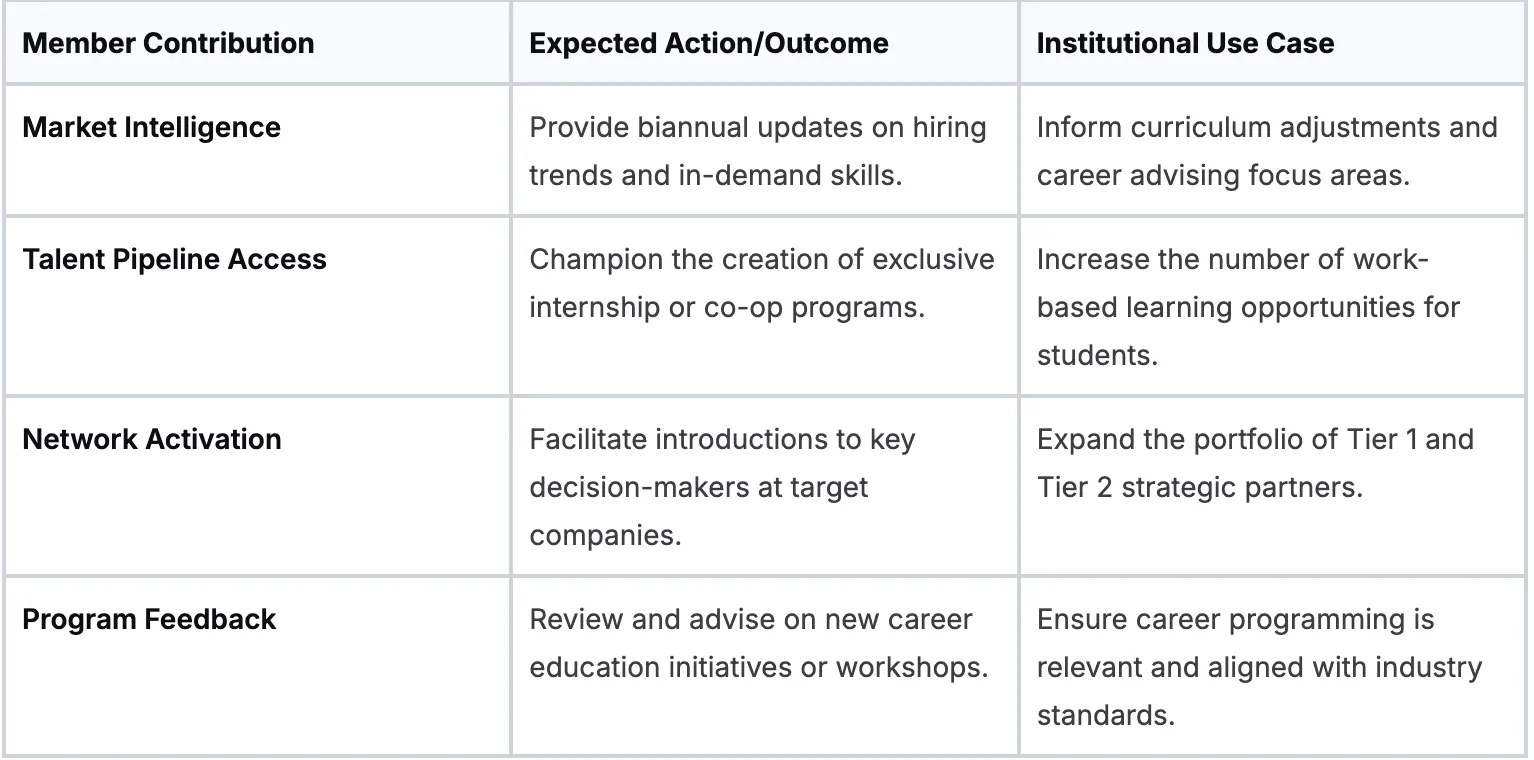
To formalize this, create a board with clear expectations.
How Should Centers Measure Partnership Success?
To justify resources, career centers must track metrics that connect employer relations activities directly to student outcomes. This involves a balanced scorecard of leading and lagging indicators, moving beyond simple vanity metrics like the number of logos on a website. A modern CRM is essential for this level of tracking.
Key metrics to track include:
- Leading Indicators: Number of unique roles and internships posted by tiered partners, student application rates for those roles, and the diversity of industries represented in the portfolio.
- Outcome Metrics: The conversion rate from student engagement (e.g., attending an info session) to interviews and hires, particularly for strategic partners.
- Hires per Partner: The total number of students (interns and full-time) hired by each partner company annually.
A 2025 report from Strada Education found that structured employer collaborations can boost job placements by up to 40% within six months of graduation, especially when they include deep programs like apprenticeships.
You can explore their findings on effective employer and community college partnerships.
Tracking these outcomes provides the data needed to demonstrate ROI to leadership. For a comprehensive look, see our guide to essential career center metrics.
Wrapping Up
Building strong employer partnerships ultimately comes down to consistency, structure, and visibility.
When career centers can clearly identify high-value partners, engage them throughout the year, and track outcomes tied to student success, employer relations shifts from a reactive function to a strategic driver of placements.
That shift, however, requires infrastructure: systems that connect advising, employer engagement, outcomes, and student adoption signals into a single, trackable workflow.
Without it, even well-designed strategies can remain difficult to scale or sustain across teams and cohorts.
Hiration is designed to support this transition.
By combining career assessments, AI-powered resume optimization, interview simulation, and a dedicated counselor module for managing workflows and analytics, it brings these moving parts into one system - within a FERPA and SOC 2-compliant environment.
The result is a more coordinated approach to preparing students, engaging employers, and demonstrating impact at scale.
Career Center Employer Partnerships — FAQs
How should career centers identify high-value employer partners?
They should use first-destination data, labor market trends, and academic program strengths to prioritize employers that consistently hire graduates and align with student demand.
Why is a tiered partnership model useful?
A tiered model helps career centers allocate time and resources more strategically, reserving high-touch support for employers that create the greatest student impact.
What do partnership tiers typically look like?
Most models include strategic partners with deep collaboration, engaged partners with recurring recruiting activity, and transactional partners with more limited, automated support.
How can employer engagement move beyond career fairs?
Career centers can create year-round touchpoints such as employer-in-residence programs, site visits, industry talks, and skills-based networking events that keep partners integrated into campus life.
How can advisory boards and alumni strengthen employer partnerships?
Advisory boards and alumni provide market insight, mentorship, warm introductions, and feedback on skills gaps, helping centers align programming with real employer needs.
What metrics should career centers use to measure partnership success?
Strong metrics include internship and job postings by tiered partners, application-to-interview and interview-to-hire conversion rates, and the number of hires generated by each employer relationship.
Why do many employer partnership strategies fail to show ROI?
Many centers track activity instead of outcomes, which makes it hard to connect employer engagement to actual student placements or justify continued resource investment.
What is the real goal of a modern employer partnership strategy?
The goal is to build a coordinated system where employer engagement, student preparation, and outcome tracking work together to improve placements and demonstrate institutional value.