How can career centers scale career preparation effectively with limited staff?
Career centers scale effectively by redesigning service delivery around triage and service design. By routing low-complexity needs to AI tools, peer mentors, and group formats, and reserving senior advisors for high-impact coaching, centers reduce operational drag, protect advisor expertise, and improve the quality of student outcomes without increasing headcount.
Most career centers frame scaling as a resource problem: not enough staff, not enough budget.
This is a misconception.
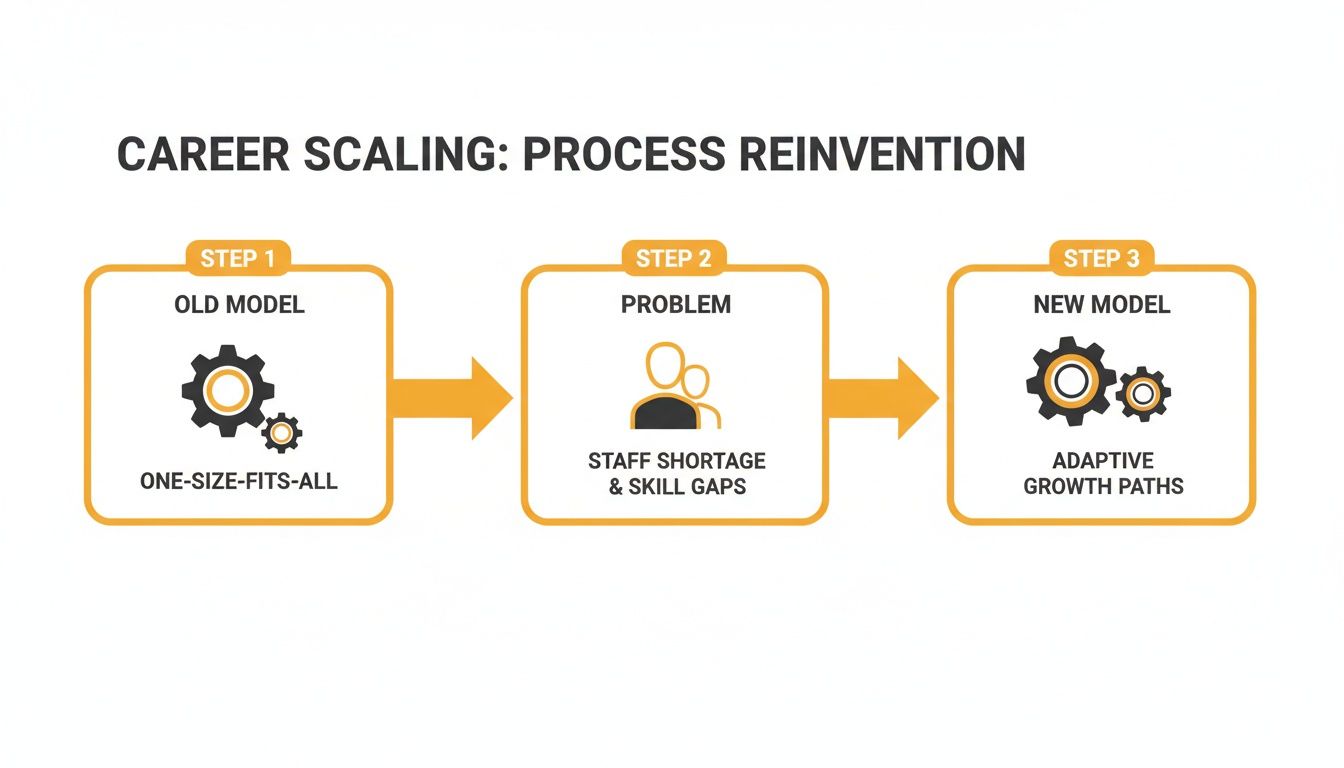
The real barrier is an operational one - a one-size-fits-all service model that treats a 5-minute resume format question with the same process as a 50-minute career crisis intervention.
This approach creates operational drag and misallocates the most valuable asset: senior advisor expertise.
The solution isn't incremental hiring; it's a fundamental redesign of service delivery that decouples low-complexity tasks from high-value advising.
This guide outlines how to implement that redesign.
How can a triage model optimize scarce advisor time?
A triage model optimizes advisor time by segmenting students based on need and matching them to the appropriate service tier, reserving intensive 1:1 advising for complex cases. This shifts the team from a reactive, first-come-first-served model to a strategic, needs-based system.
Instead of defaulting every request to a professional advisor, it creates distinct pathways.
For instance, the University of Texas at Austin's Cockrell School of Engineering career center implements a multi-layered system that blends on-demand digital tools, peer advising for quick questions, and scheduled appointments with professional staff for in-depth coaching.
This tiered structure allows them to manage a massive student volume without sacrificing quality.
The goal is to build a system where a student needing a quick format check gets an immediate answer from an AI tool or a trained peer mentor, which protects senior advisor calendars for appointments with students navigating a career pivot or facing complex, identity-related career challenges.
Also Read: Advisor Development Frameworks for Advanced Student Success Teams
Tiered Student Support Model Framework
| Support Tier | Student Profile & Triggers | Primary Delivery Method | Advisor Action | How to Verify It Worked |
|---|---|---|---|---|
| Tier 1: Self-Serve | High readiness score; needs formatting help or basic information. | AI tools (resume/interview), knowledge base, video tutorials. | Monitor platform usage; update resources based on analytics. | AI score improvement on resume; completed online modules; view counts on tutorials. |
| Tier 2: Guided Support | Moderate readiness; needs feedback on specific document sections or interview answers. | Peer mentors, group workshops, targeted email campaigns. | Train and supervise peer mentors; facilitate workshops. | Rubric-scored resume drafts; peer feedback forms; workshop artifacts. |
| Tier 3: Intensive Advising | Low readiness; complex needs (e.g., career change, identity-based challenges, low confidence). | 1:1 appointments with professional staff; specialized coaching. | Conduct deep-dive coaching; develop personalized action plans. | Documented advising notes; student-created career action plan; improved placement outcomes. |
How would a center verify that triage actually worked?
Verification requires shifting metrics from volume (number of appointments) to value (type of appointments).
The primary indicator of success is a measurable increase in the percentage of senior advisor hours spent on high-value, Tier 3 activities.
This can be verified by analyzing calendar or scheduling platform data to compare time allocation before and after implementation. A successful model will show a clear shift from basic reviews to strategic coaching.
Also Read: How should universities structure staffing models for modern career centers?
What is the role of AI in handling foundational document reviews?
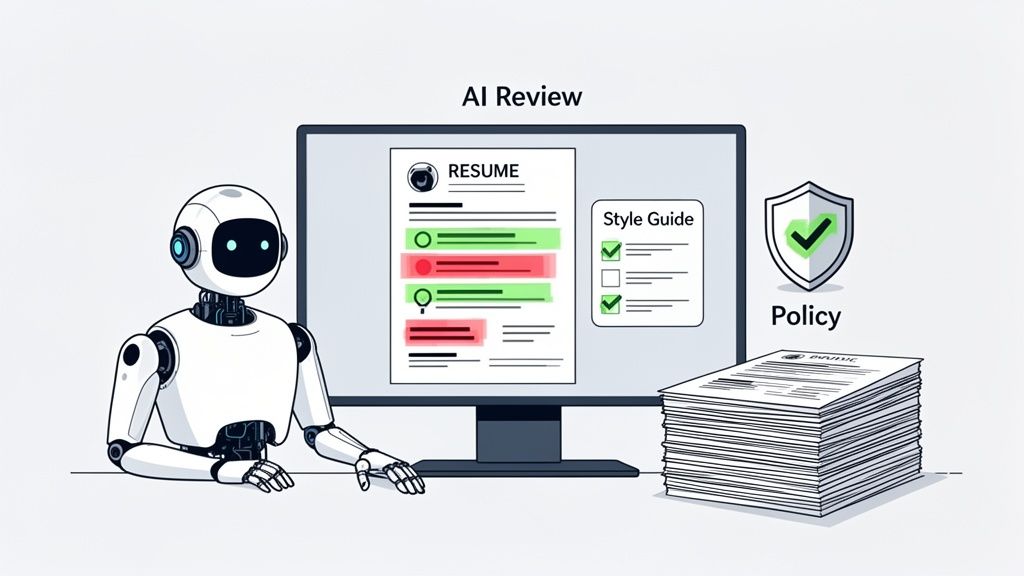
AI’s role is to automate the high-volume, low-complexity review of first-draft documents, acting as a 24/7 first-pass filter. This enables advisors to stop being gatekeepers of basic formatting and grammar rules and become strategic coaches. By handling initial checks, AI frees up advisor time for higher-level work like career narrative development and interview strategy.
Infact, according to the 2025 NACE Career Services Benchmarks Report, 59.3% of career services staff now use AI as an assistive tool, demonstrating its acceptance for building internal capacity.
However, deploying a generic AI tool without customization is a common failure mode.
A properly implemented AI system should enforce an institution's specific standards, such as official resume templates or custom rubrics based on the STAR method.
As an example of scaled, standardized feedback, Johns Hopkins University uses technology to ensure every student receives foundational guidance that meets the university's quality standards.
This scaled consistency is critical for institutional credibility.
How would a center verify that AI integration actually worked?
Success is verified by tracking the average quality score of resumes submitted for a final, human review. If the AI is effective, the baseline quality of documents reaching advisors should increase significantly.
This can be measured by comparing rubric scores of resumes before and after the AI workflow was introduced. Secondary metrics include a drop in advisor time spent on basic edits and an increase in appointments for advanced topics like interview strategy.
Also Read: What are the top 5 career services benchmarks every center must track?
How can peer mentors manage high-volume, low-complexity inquiries?
Peer mentors can effectively manage high-volume inquiries when they are trained within a structured program that defines their scope and equips them with standardized tools. This transforms them from a front-desk directory into a reliable first line of support for Tier 1 and Tier 2 issues, resolving routine questions and freeing up professional staff for complex advising.
A well-designed program, like the University of Central Florida's Career Ambassador program, avoids this by providing extensive training and a clear scope of practice.
Similarly, the Peer Ambassadors at the University of Michigan's LSA Opportunity Hub are trained to co-navigate resources with students, a hands-on approach that resolves foundational issues directly.
A key trade-off is the upfront investment in training, which is directly proportional to the long-term savings in professional staff time.
How would a center verify that a peer mentor program actually worked?
Effectiveness is verified by tracking the inquiry resolution rate - the percentage of student issues fully resolved by a peer mentor without escalation to professional staff.
This provides direct evidence of workload deflection. Additional verification can come from post-interaction surveys measuring student satisfaction and problem resolution, and an analysis of scheduling data showing a decrease in appointments for basic topics.
Also Read: How can career services teams systematically identify and close student skill gaps in 2026?
Which group advising formats are most effective for scaling?
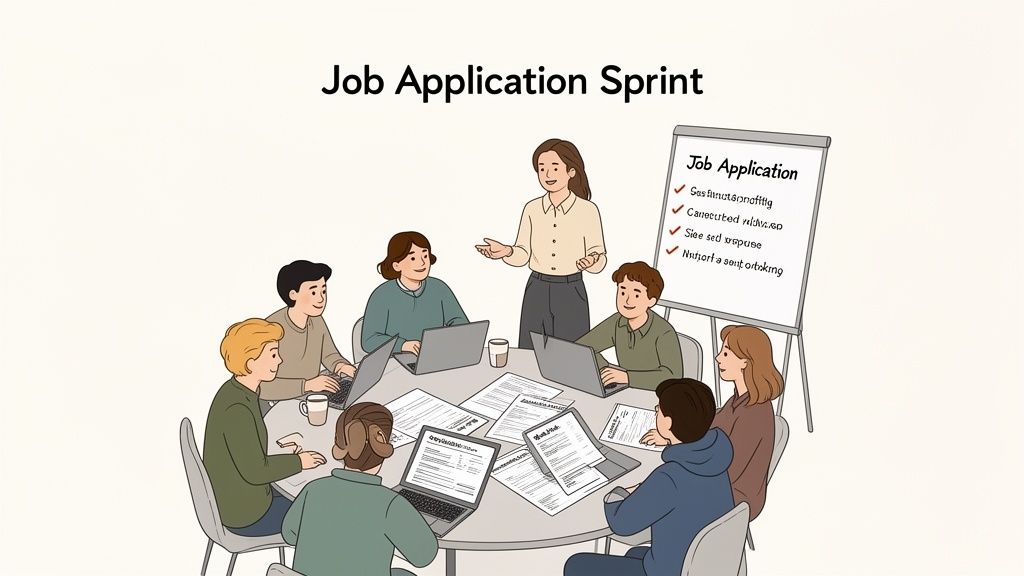
The most effective group formats are active, workshop-style sessions where students produce a tangible artifact, such as a revised resume or a draft cover letter. This "lab" model moves beyond passive, lecture-style presentations to applied learning. Formats like "Job Application Sprints," where students work on their own materials with advisor guidance, eliminate the need for many follow-up 1:1 appointments.
Embedding career modules directly into required academic courses is another high-leverage strategy.
Clemson University's Center for Career and Professional Development integrates career assignments into core courses across different majors, ensuring all students receive foundational career education and produce career-ready artifacts without adding extra events to the center's calendar.
This approach is central to the career center studio model, which emphasizes hands-on production over passive consumption of information.
How would a center verify that group sessions actually worked?
The impact of group sessions is verified by assessing the quality of artifacts produced, not by counting attendance.
The primary metric should be demonstrable improvement in resumes or cover letters, scored against a standardized rubric before and after the session.
A successful program would also show a measurable reduction in workshop attendees who book a subsequent 1:1 appointment on the same topic.
Also Read: How to Give Resume Feedback in 5 Minutes?
How can a weekly operating rhythm improve team efficiency?
A weekly operating rhythm improves efficiency by time-blocking the team’s schedule to match the tiered support model, dedicating specific days or time blocks to one type of work. This proactive structure eliminates the constant context-switching that burns out staff and protects time for high-impact activities. It transforms the team from a reactive model dictated by inbound requests to a proactive one driven by strategic priorities.
For example, a team might implement "Triage Tuesdays" for clearing all new student inquiries and "Workshop Wednesdays" for all group sessions.
This predictability allows other days to be protected for deep-dive, Tier 3 advising appointments.
The rhythm creates focus and ensures every core function of the career center receives dedicated, protected time, preventing high-priority strategic work from being constantly derailed by lower-priority tasks.
How would a center verify that a new operating rhythm actually worked?
Verification comes from tracking metrics that demonstrate improved efficiency and workload management.
The key indicator is a reduction in the average response time for new student inquiries.
A successful rhythm will also lead to a measurable increase in the number of high-impact Tier 3 appointments scheduled during dedicated advising blocks.
Finally, quarterly staff satisfaction surveys can provide qualitative data on reduced burnout and improved manageability of workloads.
Also Read: How to Build and Use a Standard Resume Critique Rubric?
Wrapping Up
Scaling career services is a systems challenge, not a staffing one. When all student needs flow through the same process, senior advisor time gets pulled into low-complexity work, and high-impact advising becomes scarce.
Sustainable scale comes from redesigning service delivery so foundational tasks are handled elsewhere and professional expertise is reserved for moments that truly matter.
That redesign depends on infrastructure that can standardize first-pass feedback, enforce institutional standards, and make advisor time visible.
Hiration supports this model with a full-stack career readiness platform spanning assessments, AI-powered resume and interview workflows, and a dedicated Counselor Module for cohort management, workflows, and analytics - built to operate securely at institutional scale with FERPA and SOC 2 compliance.
The centers that scale well do not add more appointments. They build systems that protect advisor time and improve the quality of every interaction.
Career Prep Scaling — FAQs
What problem does a triage model solve in career services?
A triage model prevents low-complexity student requests from consuming senior advisor time by matching student needs to the appropriate service tier.
How can career centers verify that triage is working?
Effectiveness is verified by tracking shifts in advisor time allocation, specifically an increase in senior advisor hours spent on high-value, complex coaching.
What role should AI play in a tiered support model?
AI should handle first-pass, low-complexity document reviews using institution-specific standards, freeing advisors to focus on narrative development and strategy.
How can peer mentors reduce advisor workload?
Trained peer mentors can resolve routine Tier 1 and Tier 2 inquiries within a defined scope, deflecting high-volume requests away from professional staff.
What group advising formats scale most effectively?
Workshop-style sessions that produce tangible artifacts, such as resumes or cover letters, reduce follow-up demand and improve learning outcomes.
Why does a weekly operating rhythm improve efficiency?
Time-blocking work by service tier reduces context switching, protects deep advising time, and ensures strategic priorities are consistently addressed.
How should centers measure whether scaling efforts succeeded?
Success is measured through improved document quality, reduced basic appointment demand, faster inquiry response times, and increased high-impact advising sessions.