How can career centers launch a studio model that expands access and scales student support?
Career centers can launch a successful studio model by defining a clear service scope, building a tiered staffing structure, designing welcoming physical and virtual spaces, creating a repeatable operational playbook, marketing the model around student needs, and continuously measuring and improving the experience. This turns drop-in support into a scalable, high-impact system rather than an informal help desk.
Career centers are expected to reach more students, earlier and more consistently, yet traditional appointment-based models often limit access and leave many students disengaged.
Low engagement quickly turns into an institutional challenge.
When fewer students use career services, it affects career readiness outcomes, utilization metrics, and how effectively teams demonstrate impact to leadership.
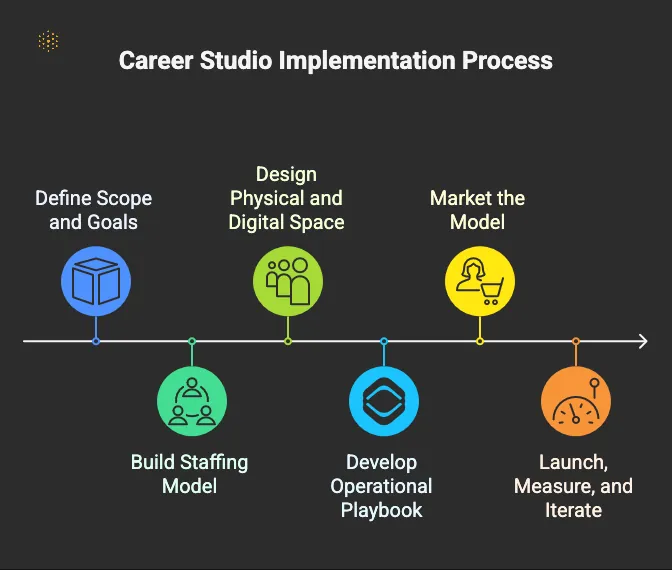
In this guide, you’ll find a practical 6-step blueprint for launching a career studio - covering scope, staffing, space design, operations, and measurement, to help career centers scale access, improve engagement, and deliver high-impact support.
Step 1: Define Your Scope and Set Clear Goals
Before you move a single piece of furniture, you need a plan.
The goal of a studio isn't to replace all in-depth career counseling but to supplement it by handling high-volume, quick-turnaround needs. You must:
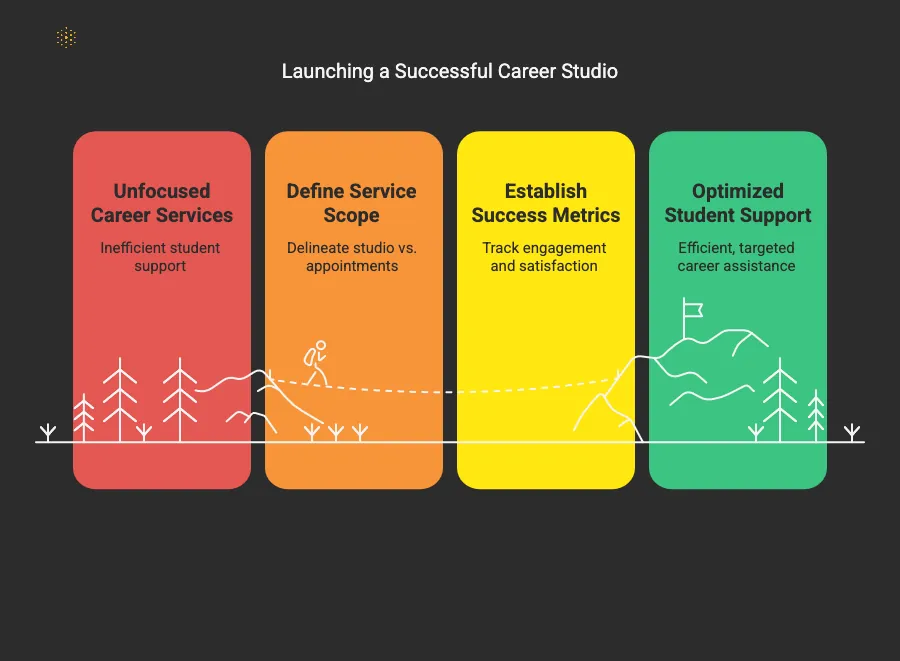
Delineate Your Services
A clear menu of services prevents confusion. Decide what belongs in the studio versus what requires a scheduled appointment.
- Studio Model: Look at the University of Cincinnati's Career Studio, which uses trained peer coaches for walk-in help with resumes, cover letters, mock interviews, and LinkedIn profiles. This is a classic studio scope.
- Appointment Model: For more complex needs, follow the lead of centers like Texas State University's Career Services. They clearly state that while drop-ins are great for quick questions, a student may be referred to schedule a follow-up appointment with a career counselor for more in-depth support.
Establish Success Metrics
How will you know if it's working?
- Engagement Metrics: Track unique student visits, the types of questions asked, and demographics. The goal is to see an increase in visits from first- and second-year students, who are often hesitant to book formal appointments.
- Satisfaction Metrics: Use a simple poll after each interaction. This data is invaluable for showing the impact of your service to university leadership, much like the data presented in the Cornell University Career Services Annual Report.
Also Read: Career Center Transformation: 3 Ways to Get Students Job-Ready
Step 2: Build Your All-Star Staffing Model
Your people are the heart of the studio. Most successful models use a tiered approach that leverages both peer advisors and professional staff.
Recruit and Train Peer Advisors
Peer advisors make the studio approachable and scalable. Look for students who are empathetic, professional, and well-connected.
A robust training program is non-negotiable. The University of Tennessee, Knoxville, clearly outlines that its Peer Career Advisors (PCAs) are trained to assist with resumes, cover letters, and job search strategies, but also to refer students to professional staff for more complex needs.
Similarly, Georgia Tech's Career Center requires its peer advisors to complete a 5-hour training session before they begin, ensuring a baseline of quality.
Define Professional Staff Roles
Counselors act as supervisors, mentors, and the next level of support. Their role in the studio is to handle escalations, float to offer expert advice, and focus on the continuous training of the student staff.
Also Read: Career Center Administration: Structure, Strategy, and Best Practices
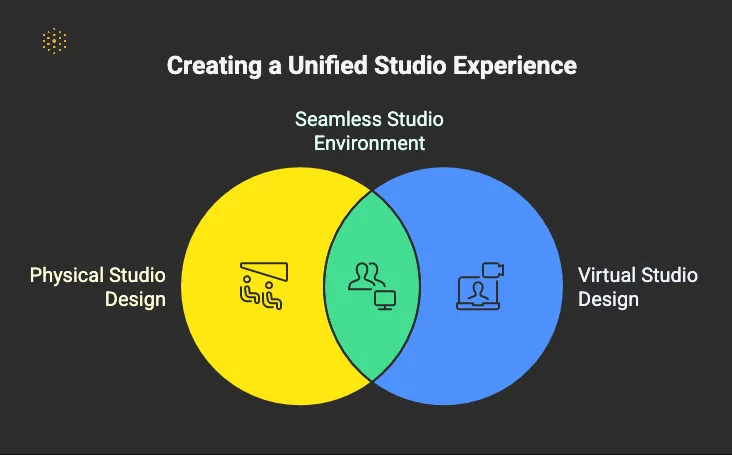
Step 3: Design Your Physical and Digital Space
The environment signals the purpose. A studio should feel open and collaborative, the opposite of a stuffy, quiet office.
Create a Welcoming Physical Space
Think "learning commons," not "waiting room." While not a "studio" by name, innovative campus building design strategies point to the value of "sticky spaces."
As described by HMC Architects, these areas use modular lounge furniture and embedded charging stations to encourage students to "stick around." Apply this concept to your studio to create an inviting, functional hub.
Build a Virtual Studio
A digital presence is essential for reaching all students. For example, Northeastern University provides a fantastic, detailed guide for how students can sign into their Virtual Career Studio.
They use their existing career platform (NUworks) to create a virtual queue, and then staff members reach out via Microsoft Teams for a video call. This creates a seamless and professional virtual drop-in experience.
Also Read: 7 Career Center Metrics Every University Should Track
Step 4: Develop Your Operational Playbook
Smooth operations are invisible to the student but essential for your team. A clear playbook ensures consistency and efficiency.
Map the Student Flow
How does a student get help? The University of Nevada, Reno's Career Studio makes it simple: "No need to schedule an appointment... Visit us... as often as you'd like - and stay for as long as you'd like!"
For a more data-driven approach, many universities now use Handshake's QR code feature for event and fair check-ins. This same technology can be easily adapted for studio drop-ins, allowing you to track visit numbers and student demographics effortlessly.
Schedule Strategically
Use campus data to determine peak times. Staff up during the weeks leading up to career fairs.
For example: Consider taking the studio "on the road." The career services team at the University of Iowa has their Career Peer Advisors present to student organizations and classes, meeting students in their own environments.
You can apply this by setting up temporary "pop-up" studio hours in the library or a first-year residence hall.
Also Read: How can career centers scale support using the multipliers framework?
Step 5: Market the Model, Not Just the Office
You have to market the new way of getting help. Your messaging should focus on convenience, speed, and accessibility.
Focus on Student Questions
Frame your marketing around the problems you solve. For example, St. Francis Xavier University's Career Studio does this brilliantly on their website.
They pose questions students are likely to have, such as: "I've never made a resume before - where do I start?" or "I have a job interview coming up. How can I best prepare?" This approach is direct, empathetic, and immediately signals value.
Use Visuals and Go Where Students Are
Create short, engaging videos for social media showing the studio in action. Feature a peer advisor giving a quick tip. Partner with faculty and ask them to add a single, visually appealing slide about the studio to their presentations.
Step 6: Launch, Measure, and Iterate
Perfection is the enemy of progress. Start with a soft launch or a limited pilot program to work out the kinks and build momentum.
- Launch Your Pilot: Run the studio for a few hours a day for a few weeks. This gives you time to test your playbook and staffing model in a lower-risk environment.
- Collect Data and Feedback: Diligently track the metrics you established in Step 1. After a session, ask students, "What was one thing that worked well, and one thing we could improve?"
- Iterate and Improve: Use the data to make informed decisions. For example, if your data shows that you're getting swamped on Tuesdays but are quiet on Fridays, adjust your hours and staffing. If feedback suggests students want help with a topic your peers aAren't trained on, you've just identified your next training module. This iterative process of tracking and improving is key for long-term student engagement, as highlighted by industry leaders like WeSolv.
Also Read: Group Advising Models That Work: Scalable Frameworks for Career Services
Final Thoughts
A career studio works best when it’s treated as a system, not just a space - one that expands access, standardizes high-volume support, and frees up staff for deeper advising.
Making this model sustainable requires the right infrastructure behind it.
Hiration supports studio environments with AI-powered resume feedback, interview simulation, and always-on guidance - along with tools for counselors to manage cohorts, workflows, and track student progress within a secure, FERPA and SOC 2-compliant setup.
The goal is simple: make career services easier to access, easier to scale, and more effective for every student who walks in.
Career Center Studio Model — FAQs
What is a career studio model?
A career studio is a high-access, drop-in support model that handles quick-turnaround needs such as resume help, LinkedIn reviews, mock interviews, and job search questions without requiring every student to book a formal appointment.
How is a studio different from traditional career counseling?
The studio is designed for high-volume, immediate support, while traditional counseling remains the right format for deeper career exploration, complex decision-making, and longer advising conversations.
What services should belong inside the studio model?
Studios work best when they focus on quick, repeatable needs such as resume reviews, cover letter checks, LinkedIn guidance, interview practice, and basic job search support.
Who should staff a career studio?
Most effective studio models use trained peer advisors for first-line support and professional staff for escalations, supervision, and ongoing training.
Why does the physical and digital setup matter?
A studio should feel approachable, open, and easy to use. Both the in-person environment and virtual access model shape whether students see the space as convenient and worth returning to.
How should career centers market a studio model?
The messaging should focus on student problems and convenience rather than just announcing a new office. Clear, question-based messaging makes the value of the studio immediately obvious.
What metrics should be tracked after launch?
Career centers should track visit volume, student demographics, satisfaction, common support topics, and changes in engagement from early-stage students to understand whether the studio is improving access and outcomes.
Why should career centers launch the studio as a pilot first?
A pilot allows the team to test staffing, workflows, student flow, and service demand before expanding, making it easier to improve the model using real data and feedback.