How can career centers scale career preparation effectively with limited staff?
Career centers scale effectively by redesigning service delivery around triage and service design. By routing low-complexity needs to AI tools, peer mentors, and group formats, and reserving senior advisors for high-impact coaching, centers reduce operational drag, protect advisor expertise, and improve the quality of student outcomes without increasing headcount.
Student demand keeps growing, but most career centers cannot keep adding appointments to solve every service gap.
The real challenge is routing. A resume formatting question, a job-search lab need, and a sensitive career decision should not move through the same advising path.
When they do, students wait longer, advisor calendars fill with low-complexity work, and high-stakes cases struggle to get the attention they need.
This guide explains how career centers can build a tiered student support model that separates self-service, AI-supported feedback, peer support, group advising, professional coaching, and specialist escalation, so students get the right level of help faster, without lowering support quality.
What Is a Tiered Student Support Model in Career Services?
A tiered student support model is a service delivery structure that matches each student request to the right level of support. Instead of sending every question to a professional advisor, the center creates different support paths for different levels of complexity.
A simple question may be handled through a website, template, FAQ, AI-supported review, or trained peer mentor.
A skill-building need may be handled through a group lab or workshop.
A complex decision should go to a professional advisor.
A high-stakes, sensitive, or specialized case may need a senior advisor or campus partner.
The model works only when the routing rules are clear.
The question is not:
“How do we serve more students with fewer staff?”
The better question is:
“Which student needs require professional judgment, and which needs can be resolved faster through another support tier?”
That distinction keeps the model from becoming a cost-cutting exercise. A strong tiered model should improve speed, consistency, quality, and access at the same time.
Also Read: Advisor Development Frameworks for Advanced Student Success Teams
Why Does One-Size-Fits-All Advising Create Operational Drag?
One-size-fits-all advising creates operational drag because every student request receives the same process, even when the complexity is different. That means a five-minute resume formatting question may take up the same appointment channel as a 50-minute conversation about career direction.
Over time, this creates three problems.
First, students with simple needs wait longer than necessary.
Second, students with complex needs struggle to access senior advisor time.
Third, career center leaders cannot easily see whether staff time is being spent on the right work.
The issue is not that basic requests are unimportant. They matter because they often help students take the first step.
The issue is that not every request needs the same level of expertise.
A tiered support model helps the center separate:
- Information requests from advising needs
- Basic document checks from strategic coaching
- General skill-building from complex decision-making
- Routine support from sensitive or high-stakes intervention
That structure allows the team to protect professional advising time without ignoring foundational student needs.
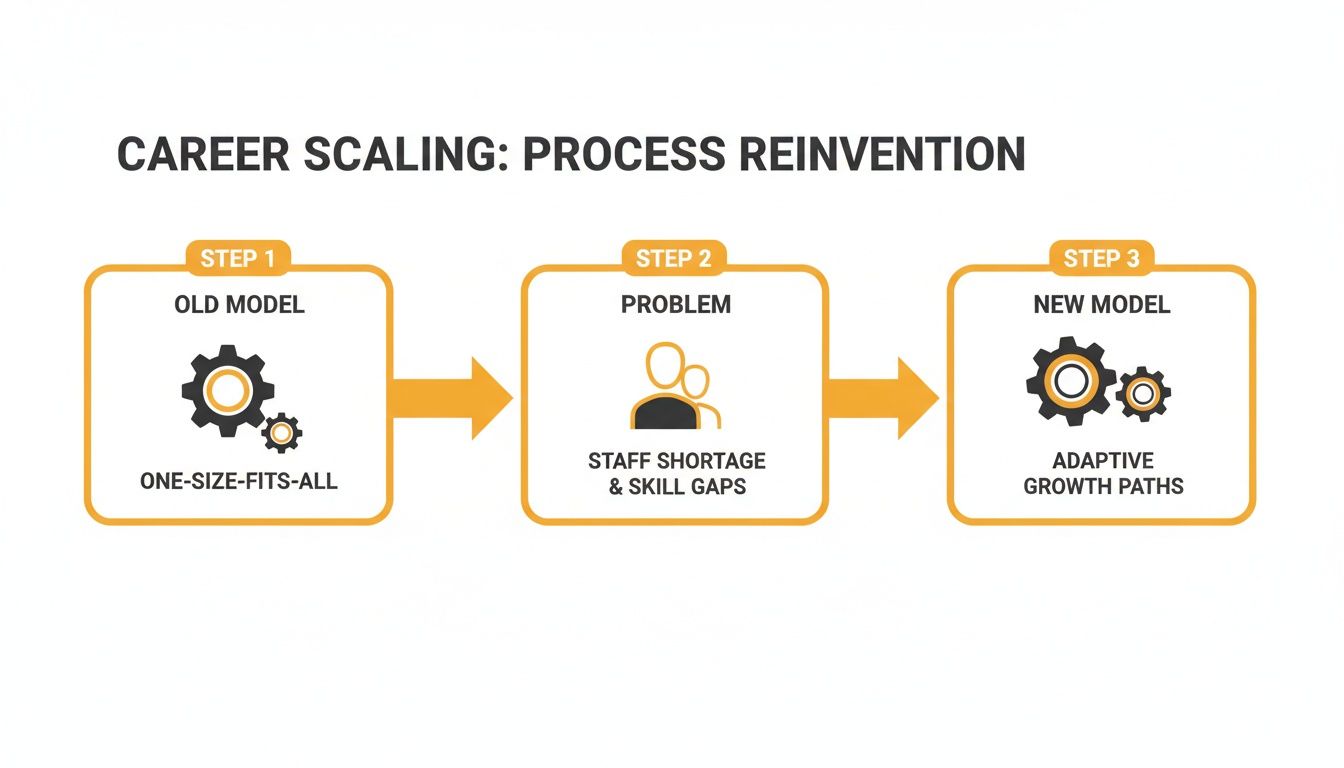
Tiered Student Support Model Framework
Career centers can use a five-level model to organize support.
| Tier | Student Need | Best Support Channel | Example Request | Escalation Trigger |
|---|---|---|---|---|
| Tier 0 | General information | Website, FAQ, recorded guide, template library, resource hub, or self-service content | “Where can I find the resume template?” | Student still cannot take action after using the resource |
| Tier 1 | Low-complexity task | AI-supported feedback, peer mentor, drop-in desk, chatbot, or short document review | “Can someone check my resume format?” | Student needs judgment, prioritization, or coaching rather than simple correction |
| Tier 2 | Applied skill-building | Workshop, group lab, cohort session, practice clinic, or assignment-based support | “I need to tailor my resume to internship opportunities.” | Student has a complex goal, repeated blocker, or needs individualized guidance |
| Tier 3 | Individual advising | Professional career advisor, career coach, or one-on-one advising appointment | “I need help choosing between career paths.” | Issue involves ambiguity, competing priorities, personal context, or higher-stakes decisions |
| Tier 4 | Specialist intervention | Senior advisor, employer-relations professional, international office, disability services, student affairs partner, or other specialist | “I need help with sponsorship, disclosure, offer negotiation, accommodations, or a career crisis.” | Requires expertise, authority, or support beyond standard career advising |
The tiers should not feel like barriers. They should feel like better routing.
A student with a simple need should get help quickly. A student with a complex need should not be stuck behind routine questions.
The model also helps staff make consistent decisions. Instead of relying on each advisor’s judgment in the moment, the center defines which requests belong in each pathway.
Also Read: How should universities structure staffing models for modern career centers?
How Should Career Centers Route Common Student Requests?
Routing should be based on the complexity and risk of the request, not just the topic.
A resume question can be simple or complex.
A job-search question can be routine or urgent.
An interview question can be basic practice or evidence of a deeper readiness gap.
Use the table below to avoid defaulting every request to a standard appointment.
| Student Request | Wrong Default | Better Routing |
|---|---|---|
| “Where is the resume template?” | 30-minute appointment | Tier 0 resource page or automated reply |
| “Can someone check my resume formatting?” | Professional advisor appointment | Tier 1 AI-supported review or peer mentor drop-in |
| “I need help writing bullets for a specific internship.” | Generic resume resource | Tier 2 resume lab with job-description alignment |
| “I do not know what roles fit my major.” | Resource list only | Tier 3 career exploration appointment |
| “I keep getting interviews but no offers.” | Another resume review | Tier 3 mock interview or interview strategy appointment |
| “I am an international student and unsure how to discuss sponsorship.” | General job-search workshop | Tier 4 specialist-informed advising or international student career session |
| “I need help deciding whether to accept an offer.” | Peer support or general resource | Tier 3 or Tier 4 professional advising |
| “I graduate soon and have not started applying.” | Newsletter link | Tier 3 triage appointment with short action plan |
| “I want feedback on my LinkedIn headline.” | Full advising appointment | Tier 1 peer review or Tier 2 LinkedIn lab |
| “I need help explaining a career gap or sensitive situation.” | Generic interview prep | Tier 3 or Tier 4 professional advising |
The same topic can move across tiers depending on context. A basic resume formatting question may belong in Tier 1.
While a resume for a career pivot may belong in Tier 3.
A resume involving disclosure, immigration complexity, or sensitive personal context may require Tier 4 support.
That is why the model must include escalation rules.
What Belongs in Tier 0 Self-Service Support?
Tier 0 should handle information that does not require interpretation. It is the layer students can use before they meet a person.
Examples include:
- Resume templates
- Cover letter templates
- Interview prep guides
- Career fair preparation checklist
- Appointment booking instructions
- Handshake or platform tutorials
- LinkedIn profile checklist
- Salary research resources
- Career assessment instructions
- Recorded orientation videos
- Employer event FAQs
- First-destination survey instructions
Tier 0 works when the content is easy to find, easy to understand, and connected to the next step.
A resource hub should not become a digital filing cabinet.
Each resource should answer:
- What problem does this solve?
- Who should use it?
- What should the student do after using it?
- When should the student escalate to a person?
Example:
Resume Template Page
- Use this if: You need to build a first resume draft.
- Next step: Upload your draft for review.
- Escalate if: You are changing careers, applying to a competitive role, or unsure how to explain your experience.
That last line matters.
Tier 0 should not trap students in self-service. It should help them act or move to the right tier.
Also Read: What are the top 5 career services benchmarks every center must track?
Where Should AI Fit in the Tiered Support Model?
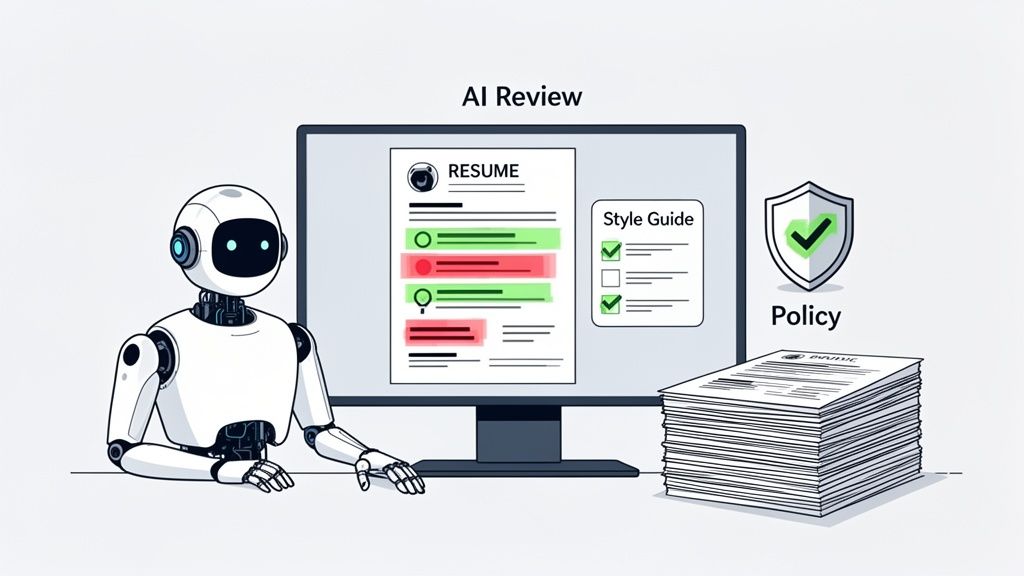
AI belongs in Tier 0 and Tier 1 when the task is repetitive, rules-based, and low-risk. It should not replace professional judgment for career direction, sensitive advising, offer decisions, identity-related concerns, sponsorship questions, disclosure, or complex student situations.
Appropriate Tier 0-1 uses include:
- First-pass resume formatting feedback
- Basic grammar and clarity suggestions
- Resume rubric checks
- Keyword alignment prompts
- Cover letter structure review
- Interview practice prompts
- LinkedIn profile checklist support
- Resource recommendations based on stated need
The value of AI is not that it removes advisors from the process.
The value is that it raises the baseline quality of student preparation before an advisor gets involved.
For example, if students can fix formatting, spelling, section order, and basic bullet structure before a human review, advisors can spend more time on role alignment, career narrative, strategy, and decision-making.
Career centers should use clear guardrails:
- AI should follow institutional resume and interview standards.
- Students should know when feedback is automated.
- Sensitive personal information should not be entered into unapproved tools.
- AI feedback should include escalation prompts.
- Advisors should review patterns in AI feedback to identify common student gaps.
- Complex cases should always route to a professional.
A useful rule:
AI can support correction, preparation, and practice. Advisors should own judgment, context, and strategy.
That keeps AI inside the tiered model instead of letting it become a separate, ungoverned service channel.
How Can Peer Mentors Support the First Two Tiers?
Peer mentors are most useful when they support Tier 1 and parts of Tier 2. They should not function as informal replacements for professional advisors.
A peer mentor can help students:
- Find resources
- Navigate platform tools
- Understand basic resume structure
- Prepare for career fair conversations
- Practice simple interview prompts
- Review checklists
- Explain common next steps
- Encourage appointment booking when needed
A peer mentor should not be expected to handle:
- Offer negotiation
- Sponsorship questions
- Disclosure or accommodation concerns
- Career crisis conversations
- Sensitive identity-related advising
- Complex career pivots
- Repeated interview failure
- Mental health or personal crisis indicators
The peer role needs boundaries.
A strong peer support model includes:
- A defined scope of practice
- Referral scripts
- Common issue checklists
- Escalation rules
- Supervisor review
- Simple case tracking
- Quality checks
Example referral script:
“I can help you review the basic structure of your resume today. Since you are applying for a competitive internship and changing your target role, the next step should be a professional advising appointment so an advisor can help you align the resume to that specific field.”
That kind of script protects students and peer mentors.
It also keeps the tiered model from lowering support quality.
Also Read: How Can Career Centers Cut Student No-Shows and Boost Attendance?
Which Group Advising Formats Belong in Tier 2?
Tier 2 should be used for applied skill-building. This is where group support works best.
The goal is not to run more workshops. The goal is to move students from passive learning to completed action.
Useful Tier 2 formats include:
- Resume revision labs
- Cover letter writing sprints
- LinkedIn profile labs
- Mock interview practice groups
- Career fair preparation labs
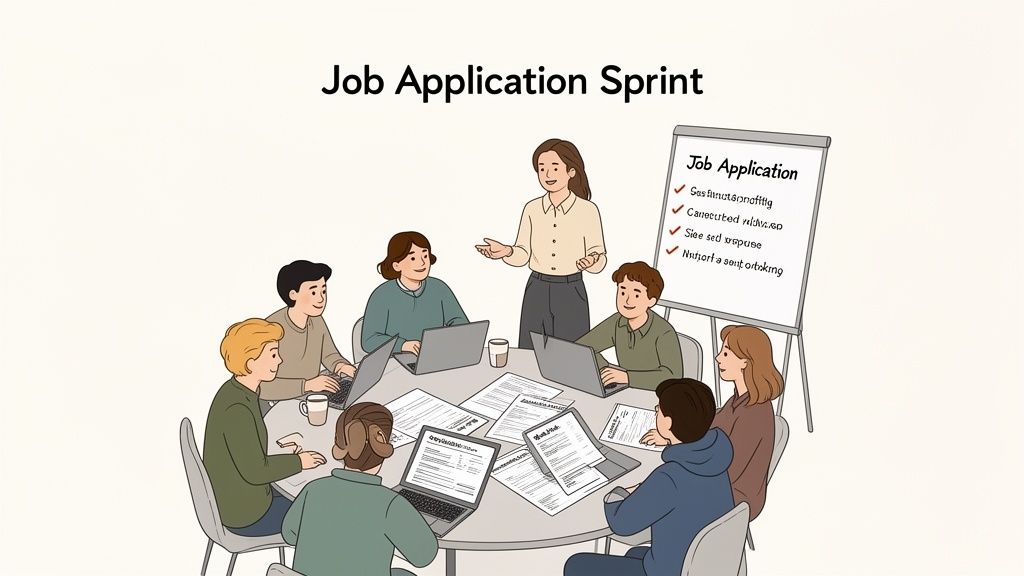
- Job application sprints
- Networking message clinics
- Career exploration cohorts
- Senior job-search action sessions
- Portfolio review labs
The strongest Tier 2 sessions produce an artifact.
That artifact might be:
- A revised resume bullet
- A role-specific resume draft
- A LinkedIn headline
- A networking message
- A STAR interview answer
- A target employer list
- A short job-search plan
- A career fair introduction
- A cover letter paragraph
Tier 2 should reduce avoidable 1:1 demand by helping many students complete the same task at the same time.
But it should also surface students who need more help.
Example:
A resume lab may resolve most routine revision needs, but students who still cannot explain their target role, have complex experience gaps, or need tailored strategy should be routed to Tier 3.
That is the logic of the model. Group support should not replace individual advising. It should clarify who truly needs it.
When Should a Student Be Escalated to Professional Advising?
Escalation is the safety valve in a tiered support model. Career centers should escalate students to professional advising when the request requires interpretation, judgment, or sensitive context.
| Escalation Signal | Why It Matters |
|---|---|
| Student has repeated low progress after self-service resources, AI feedback, peer support, or workshops | The barrier is likely deeper than information access and may require individualized advising |
| Student is choosing between career paths, majors, industries, or graduate-school options | Requires reflection, trade-off analysis, and professional advising judgment |
| Student is close to graduation with no clear plan, applications, or next steps | Represents a high-stakes timing issue that may require immediate intervention |
| Student has repeated interview failures despite receiving interview opportunities | May require diagnostic coaching to identify readiness, communication, or strategy gaps |
| Student is navigating sponsorship, visa status, work authorization, or immigration-related concerns | Requires specialized guidance and careful referral pathways |
| Student is considering offer negotiation, competing offers, offer acceptance, or offer rejection | Involves a high-impact decision with potential long-term consequences |
| Student raises disclosure, accessibility, identity, accommodation, or other sensitive personal concerns | Requires professional handling, appropriate boundaries, and potentially cross-campus support |
| Student is changing careers, pivoting industries, or reframing a non-linear academic or professional background | Requires strategic narrative development and tailored positioning |
| Student shows distress, crisis language, significant uncertainty, or signs of being overwhelmed | May require referral to campus partners, student-support services, or additional intervention |
| Request involves employer relations, faculty coordination, internship disputes, or external stakeholder involvement | May require collaboration across teams and responsibilities beyond standard advising |
A tiered support model should always allow upward movement. Students should not need to “earn” advisor access by failing lower tiers repeatedly.
They should be routed appropriately as soon as complexity becomes visible.
Also Read: How can career services teams systematically identify and close student skill gaps in 2026?
How Should Career Centers Measure Whether Tiered Support Is Working?
A tiered support model should be measured by time allocation, student progress, support quality, and equity.
Do not measure success only by the number of students served.
More interactions are not always better if professional time is still being consumed by low-complexity work.
Use a focused measurement table.
| Goal | Metric |
|---|---|
| Protect Senior Advisor Time | Percentage of advisor hours devoted to Tier 3–4 cases involving complex decision-making, ambiguity, or high-stakes situations |
| Resolve Simple Requests Faster | Median response time for Tier 0–1 questions and percentage resolved within the target service window |
| Improve Self-Service Usefulness | Percentage of students who successfully resolve their issue without booking an advising appointment |
| Maintain Quality | Resume, LinkedIn, interview, or application-material rubric scores before and after human review |
| Strengthen Peer Support | Peer mentor resolution rate, escalation accuracy, and student satisfaction following peer interactions |
| Improve Group Support | Artifact completion rates, revision quality, workshop follow-through, and skill application after labs or cohort sessions |
| Prevent Inequity | Routing patterns, escalation rates, service access, and resolution outcomes by approved student groups |
| Reduce Repeat Basic Appointments | Percentage of repeat appointments for the same low-complexity issue that could have been addressed through lower-tier support |
| Increase Advanced Advising Access | Growth in appointments focused on career pivots, interview strategy, offer decisions, graduate school planning, and other complex advising needs |
| Improve Student Experience | Post-interaction clarity, confidence in next steps, satisfaction ratings, and reported ability to take action |
A simple before-and-after comparison can show whether the model is working. Before implementation, measure:
- Appointment topics
- Wait times
- No-show rates
- Repeat basic requests
- Advisor time spent by topic
- Student satisfaction
- Follow-up completion
- Referral patterns
After implementation, compare whether:
- Low-complexity issues are resolved faster
- Senior advisor calendars shift toward complex cases
- Students complete more next steps
- Peer mentor escalations are accurate
- Group labs reduce repeated one-on-one appointments
- No student group loses access to professional support
The model should be adjusted if the data shows speed improved but quality or equity declined.
Also Read: How to Build and Use a Standard Resume Critique Rubric?
How Can Career Centers Start a Tiered Support Model in 30 Days?
Career centers do not need a full technology overhaul to begin. Start with one high-volume service area and build a small routing pilot. Resume support is usually a strong starting point because it creates many repeatable requests and clear escalation signals.
| Timeline | Action |
|---|---|
| Week 1 | Audit appointment topics, identify low-complexity repeat requests, and note which issues could move to self-service, peer support, or AI-supported review |
| Week 2 | Define Tier 0–4 categories, routing rules, escalation triggers, and ownership for one high-volume service area |
| Week 3 | Build or update self-service resources, peer scripts, AI-supported review rules, advisor handoff notes, and group lab format |
| Week 4 | Pilot triage for one topic, then track routing accuracy, completion rates, escalation patterns, advisor time saved, and student feedback |
A resume-support pilot might look like this:
Tier 0
Students access resume templates, resume checklist, recorded guide, and example bullets.
Tier 1
Students use AI-supported review or peer mentor drop-in for formatting, structure, and basic bullet clarity.
Tier 2
Students attend a resume lab to tailor their resume to a job description.
Tier 3
Students meet with an advisor for career pivot resumes, competitive applications, complex experience translation, or repeated revision issues.
Tier 4
Students are referred to specialist support if the resume involves disclosure, sponsorship, sensitive context, or employer-relations complexity.
The pilot should answer:
- Which requests were resolved at Tier 0 or Tier 1?
- Which students escalated?
- Were escalations appropriate?
- Did advisor time shift toward higher-value work?
- Did students complete the intended next step?
- Did any student group appear underserved by the routing rules?
After one cycle, the center can refine the model and expand it to interviews, LinkedIn reviews, job-search planning, or career exploration.
Wrapping Up
Scaling career services is a systems challenge, not a staffing one. When all student needs flow through the same process, senior advisor time gets pulled into low-complexity work, and high-impact advising becomes scarce.
Sustainable scale comes from redesigning service delivery so foundational tasks are handled elsewhere and professional expertise is reserved for moments that truly matter.
That redesign depends on infrastructure that can standardize first-pass feedback, enforce institutional standards, and make advisor time visible.
Hiration supports this model with a full-stack career readiness platform spanning assessments, AI-powered resume and interview workflows, and a dedicated Counselor Module for cohort management, workflows, and analytics - built to operate securely at institutional scale with FERPA and SOC 2 compliance.
The centers that scale well do not add more appointments. They build systems that protect advisor time and improve the quality of every interaction.
Career Prep Scaling — FAQs
What problem does a triage model solve in career services?
A triage model prevents low-complexity student requests from consuming senior advisor time by matching student needs to the appropriate service tier.
How can career centers verify that triage is working?
Effectiveness is verified by tracking shifts in advisor time allocation, specifically an increase in senior advisor hours spent on high-value, complex coaching.
What role should AI play in a tiered support model?
AI should handle first-pass, low-complexity document reviews using institution-specific standards, freeing advisors to focus on narrative development and strategy.
How can peer mentors reduce advisor workload?
Trained peer mentors can resolve routine Tier 1 and Tier 2 inquiries within a defined scope, deflecting high-volume requests away from professional staff.
What group advising formats scale most effectively?
Workshop-style sessions that produce tangible artifacts, such as resumes or cover letters, reduce follow-up demand and improve learning outcomes.
Why does a weekly operating rhythm improve efficiency?
Time-blocking work by service tier reduces context switching, protects deep advising time, and ensures strategic priorities are consistently addressed.
How should centers measure whether scaling efforts succeeded?
Success is measured through improved document quality, reduced basic appointment demand, faster inquiry response times, and increased high-impact advising sessions.