How can faculty integrate career readiness into coursework without adding extra workload?
Faculty can embed career readiness into existing courses using plug-and-play assignments like AI-scored resumes, mock interviews, LinkedIn optimization, and job description analysis. Each activity produces a verifiable artifact that demonstrates student capability, allows quick rubric-based grading, and turns career preparation into a measurable academic outcome rather than an optional add-on.
The prevailing model of career readiness fails at scale because it treats career development as an extracurricular activity, confining it to an overburdened career center.
This leads to inequitable engagement, with only 42% of seniors frequently discussing career plans with faculty, according to the National Survey of Student Engagement (NSSE).
The misconception is that faculty lack time or expertise. The reality is they lack scalable, academically-rigorous tools.
The solution is not asking faculty to become career advisors, but providing them with assignments that integrate seamlessly into their curriculum, respect their time, and produce verifiable career artifacts.
These assignments shift career development from an add-on to a measurable academic outcome.
What are plug-and-play career assignments for faculty?
These are structured, gradable activities designed for easy integration into existing academic courses. They require minimal faculty expertise in career advising and leverage scalable tools to teach career competencies like resume writing, interviewing, and networking.
The output is a verifiable artifact - such as an ATS-optimized resume or a scored mock interview that demonstrates student readiness.
How can these assignments be tailored for different majors?
Tailoring involves aligning the assignment's core task with discipline-specific outcomes. For a STEM course, a resume assignment can require students to optimize for technical roles, focusing on skills like Python or lab techniques.
For humanities, the same assignment can focus on translating analytical skills into business language, such as reframing "archival research" as "qualitative data analysis."
Also Read: What are some good icebreakers for career coaching sessions?
What kind of rubrics can faculty grade quickly?
Effective rubrics for faculty use a simplified, points-based system focused on verifiable outcomes rather than subjective quality.
For example, a resume rubric could award points for achieving an AI-generated ATS score above 80, using achievement-oriented language (Action Verb + Quantifiable Result), and professional formatting, making grading objective and fast.
Here's the breakdown:
1. The AI-Powered Resume Optimization Assignment
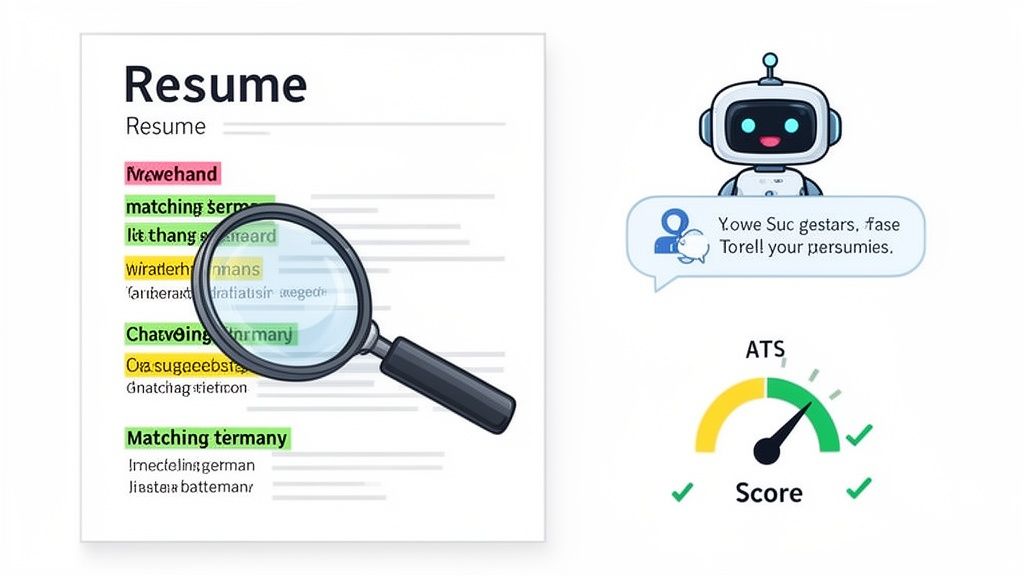
This high-impact activity requires students to use an AI tool to analyze their resume against a real job description. It provides instant, data-driven feedback on keyword alignment and formatting, producing a verifiable ATS score.
This scales the most time-consuming task for career centers - manual resume reviews - while teaching students how Applicant Tracking Systems work.
For instance, the University of Arizona's Career Center uses an AI-scoring model to provide immediate, actionable feedback on thousands of student resumes annually, empowering students to iterate independently.
Also Read: How to Give Resume Feedback in 5 Minutes?
Learning Objectives:
- ATS Competency: Understand how Applicant Tracking Systems parse and score resumes.
- Targeted Communication: Tailor resume content to match specific job requirements.
- Achievement Quantification: Frame experiences as measurable accomplishments.
Verification Method:
Submit the final resume, the target job description, and the AI-generated score report. A brief reflection explains the revisions made based on AI feedback.
Simplified Grading Rubric (10-Point Scale):
- ATS Score & Keyword Alignment (4 points): Achieves an AI score of 80+ against the target job description.
- Achievement-Oriented Language (3 points): Bullet points use the "Action Verb + Quantifiable Result" formula.
- Formatting & Readability (2 points): Document is professionally formatted and error-free.
- Reflection (1 point): Reflection clearly articulates learnings from the AI feedback.
Also Read: How to Build and Use a Standard Resume Critique Rubric?
2. The Mock Interview Simulation Assignment
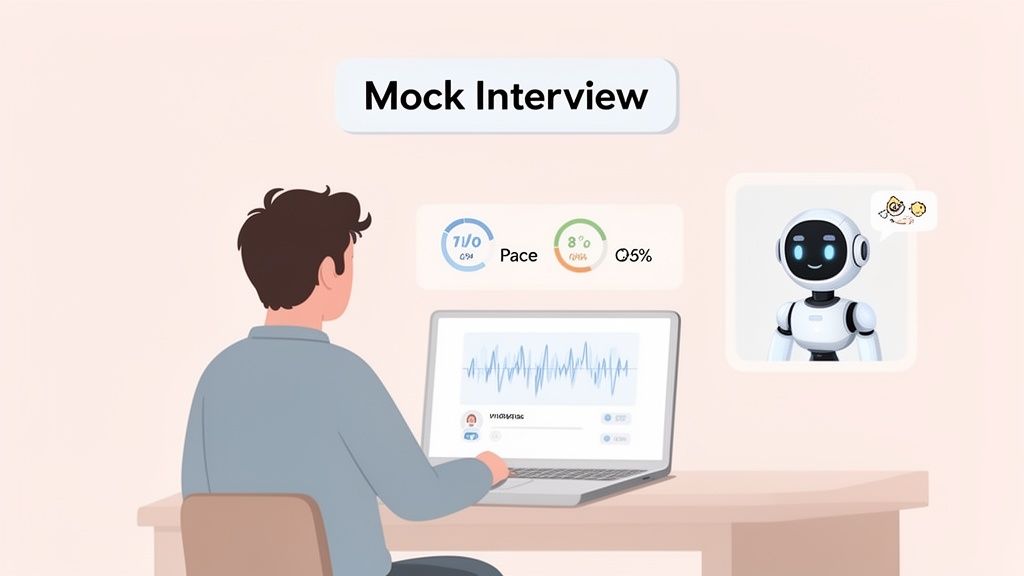
This assignment uses an AI-powered platform to simulate a realistic interview. Students record their answers to common behavioral questions and receive immediate, data-backed feedback on pacing, filler words, and response structure.
This approach addresses the logistical challenge of providing personalized interview coaching at scale, allowing students to conduct unlimited practice rounds independently before meeting with a human advisor for nuanced, role-specific guidance.
Learning Objectives:
- Communication Proficiency: Reduce filler words and speak at a professional pace.
- Structured Storytelling: Practice the STAR (Situation, Task, Action, Result) method for behavioral questions.
- Composure and Confidence: Build confidence through repeated, low-stakes practice.
Verification Method:
Submit a link to the final recorded AI interview and the performance report. A reflection should compare the first and second attempts, detailing specific improvements.
Simplified Grading Rubric (10-Point Scale):
- STAR Method Application (4 points): Responses to behavioral questions clearly articulate Situation, Task, Action, and Result.
- Communication Clarity (3 points): AI report shows minimal filler words and appropriate pacing.
- Content Relevance (2 points): Answers are relevant and showcase required skills.
- Reflection & Improvement (1 point): Reflection shows measurable improvement between attempts.
Also Read: How should career advisors evaluate mock interviews in 2026?
3. The LinkedIn Profile Optimization Assignment
This assignment transforms a student’s passive online presence into an active career asset. Students build a comprehensive, keyword-optimized LinkedIn profile that meets professional standards.
An automated auditing tool scores the profile for completeness and optimization, providing a clear roadmap for improvement.
This gamifies the process, making students more discoverable to the 94% of recruiters who use LinkedIn for sourcing talent.
Learning Objectives:
- Digital Professionalism: Construct a complete and professional LinkedIn profile.
- Keyword Optimization: Embed relevant keywords in the headline, summary, and experience sections.
- Personal Branding: Articulate a compelling professional narrative that aligns skills with career goals.
Verification Method:
Submit the public LinkedIn profile URL and a screenshot of the automated audit score. The deliverable should also include a brief reflection on how the optimization process clarified their personal brand. Get more ideas on how to unlock LinkedIn for student success.
Simplified Grading Rubric (10-Point Scale):
- Profile Completeness & Score (4 points): Achieves "All-Star" LinkedIn rating and an audit score of 85+.
- Headline & Summary Optimization (3 points): Headline is keyword-rich; summary tells a professional story.
- Achievement-Focused Experience (2 points): Bullet points describe quantifiable accomplishments.
- Professionalism (1 point): Profile is free of errors.
Also Read: Where does AI add real value in career services, and where does it fall short?
4. Job Description Analysis & Gap Mapping Assignment
This foundational assignment requires students to deconstruct three to five real job descriptions for their target roles.
Using a structured worksheet, they extract critical skills and qualifications and map their current competencies against these requirements.
This transforms the job search from a reactive process into proactive, data-driven planning.
Olin College of Engineering uses a similar self-assessment model to help students identify skill gaps early and strategically select coursework and projects to become more competitive candidates.
Learning Objectives:
- Market Literacy: Decode job descriptions to understand employer needs.
- Self-Assessment & Gap Analysis: Objectively assess skills against professional standards.
- Strategic Planning: Create an actionable plan to acquire missing skills before graduation.
Verification Method:
Submit the completed analysis worksheet mapping personal skills against employer requirements, alongside a one-paragraph development plan outlining concrete actions to close identified gaps.
Simplified Grading Rubric (10-Point Scale):
- Thoroughness of Analysis (4 points): Accurately identifies key skills from all job descriptions.
- Self-Awareness in Mapping (3 points): Realistically maps existing skills to job requirements.
- Actionable Development Plan (2 points): Plan for closing gaps is specific and realistic.
- Clarity & Professionalism (1 point): The worksheet is complete and well-organized.
| Assignment Focus | Primary Competency | Verifiable Artifact | Faculty Time/Effort |
|---|---|---|---|
| AI Resume Optimization | Targeted Communication, ATS Literacy | Resume with 80+ AI Score | Low (Automated scoring) |
| AI Mock Interview | Oral Communication, Structured Storytelling | Recorded Interview with AI Feedback Report | Low (Automated feedback) |
| LinkedIn Optimization | Digital Professionalism, Personal Branding | "All-Star" Profile with 85+ Audit Score | Low (Automated scoring) |
| Job Description Analysis | Self-Assessment, Strategic Planning | Completed Skill Gap Analysis Worksheet | Medium (Worksheet review) |
Also Read: How career centers can support seniors without jobs before graduation?
Wrapping Up
Career readiness does not scale when it remains an optional add-on.
It becomes effective when it is embedded into the curriculum through structured, low-lift assignments that generate verifiable evidence of student capability -resumes, interview recordings, and skill-gap plans that faculty can grade quickly and consistently.
Equipping faculty with academically aligned, plug-and-play activities makes career development measurable, equitable, and repeatable across departments.
Connecting these activities within a unified system then enables longitudinal tracking from first self-assessment to job offer, giving advisors a complete, data-backed view to guide students more effectively.
Hiration provides this FERPA-compliant, AI-supported infrastructure to scale support, improve efficiency, and strengthen career outcomes across the student journey.
For institutions focused on scaling impact, the next step is selecting models and systems that make career readiness both visible and measurable.
Plug-and-Play Career Assignments for Faculty — FAQs
What are plug-and-play career assignments?
These are structured, gradable activities that integrate into existing courses and produce verifiable outputs like resumes, interview recordings, LinkedIn profiles, and skill-gap analyses.
Why should career readiness be embedded in coursework?
Embedding career readiness in coursework ensures equitable access for all students and generates measurable evidence of skill development instead of optional engagement.
How can faculty grade career assignments quickly?
Faculty can use simplified, points-based rubrics tied to verifiable outputs such as ATS scores, STAR responses, LinkedIn audit scores, or competency mapping worksheets.
How can assignments be tailored for different academic majors?
Assignments can be aligned with discipline-specific outcomes, such as technical skills for STEM roles or transferable analytical skills for humanities and business careers.
What outcomes do AI-powered resume assignments produce?
These assignments help students understand ATS systems, improve keyword alignment, and produce optimized resumes with measurable scores and clear revisions.
How do mock interview assignments improve student readiness?
Mock interview simulations provide structured practice, real-time feedback on communication, and measurable improvement across multiple attempts.
What is the purpose of job description analysis assignments?
These assignments teach students to decode employer expectations, identify skill gaps, and create actionable plans to become competitive candidates.
How do LinkedIn assignments support career readiness?
LinkedIn optimization assignments help students build professional online identities, improve discoverability in recruiter searches, and articulate their personal brand clearly.
How can institutions scale career readiness across departments?
Institutions can scale impact by embedding standardized assignments into curricula and using integrated platforms to track student outcomes across the entire journey.