How can career centers improve career outcomes for students with disabilities?
Career centers can improve outcomes by integrating accessibility into advising, partnering closely with disability services offices, targeting inclusive employers, expanding work-based learning opportunities, and preparing students to advocate for accommodations during hiring processes. This approach ensures career support is proactive, accessible, and aligned with real employer practices.
A college degree should expand opportunity, but for many students with disabilities, graduation does not erase the barriers waiting on the other side of campus.
Too often, these students leave college with the same credentials as their peers but face a very different job market, one shaped by inaccessible hiring processes, limited employer readiness, and uneven support systems.
That is why career services cannot rely on standard advising models alone.
To improve outcomes, CSPs need a more intentional approach, one that integrates accessibility, employer targeting, self-advocacy, and cross-campus collaboration.
This blog explores how career centers can redesign their strategies to better support disabled students from career exploration through employment.
Why must we rethink career services for disabled students?
Despite earning degrees, students with disabilities face a massive employment gap. Traditional career prep isn't enough to overcome systemic barriers. By actively revamping our approach and abandoning one-size-fits-all advising, we ensure these graduates secure meaningful, long-term employment that aligns with their education rather than settling for persistent underemployment.
The "education gap" is real, but a degree doesn't instantly level the playing field. In 2025, the unemployment rate for workers with a disability was 7.2%, roughly twice that of those with no disability, according to the U.S. Bureau of Labor Statistics.
Furthermore, research shows that graduates with disabilities are more likely to be underemployed and underpaid.
The standard advice of "cast a wide net" does not work here.
CSPs must intervene early to help students identify employers who actually value inclusive hiring.
We know that more than four out of five employers have formal diversity recruitment efforts, according to NACE's Recruiting Benchmarks Report, meaning the opportunities exist if we guide students to them properly.
Also Read: How Can Career Centers Improve Career Readiness for Transfer Students?
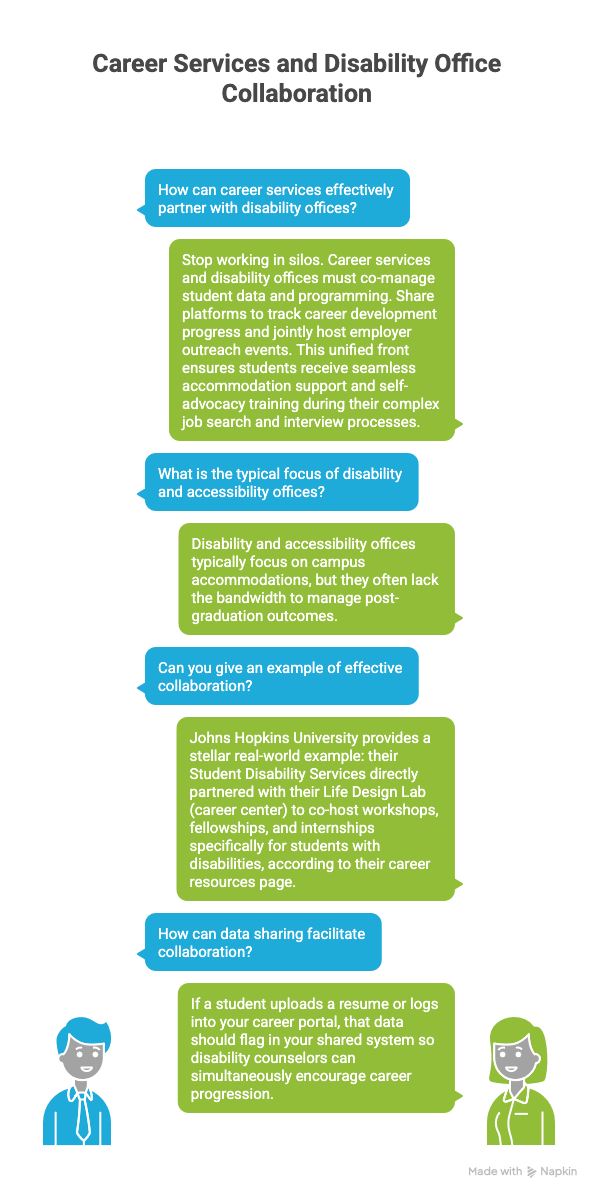
How can career services effectively partner with disability offices?
Stop working in silos. Career services and disability offices must co-manage student data and programming. Share platforms to track career development progress and jointly host employer outreach events. This unified front ensures students receive seamless accommodation support and self-advocacy training during their complex job search and interview processes.
Disability and accessibility offices typically focus on campus accommodations, but they often lack the bandwidth to manage post-graduation outcomes.
Johns Hopkins University provides a stellar real-world example: their Student Disability Services directly partnered with their Life Design Lab (career center) to co-host workshops, fellowships, and internships specifically for students with disabilities, according to their career resources page.
If a student uploads a resume or logs into your career portal, that data should flag in your shared system so disability counselors can simultaneously encourage career progression.
Also Read: What Scripts Should Advisors Use for Difficult Student Scenarios?
What does Universal Design look like in a career center?
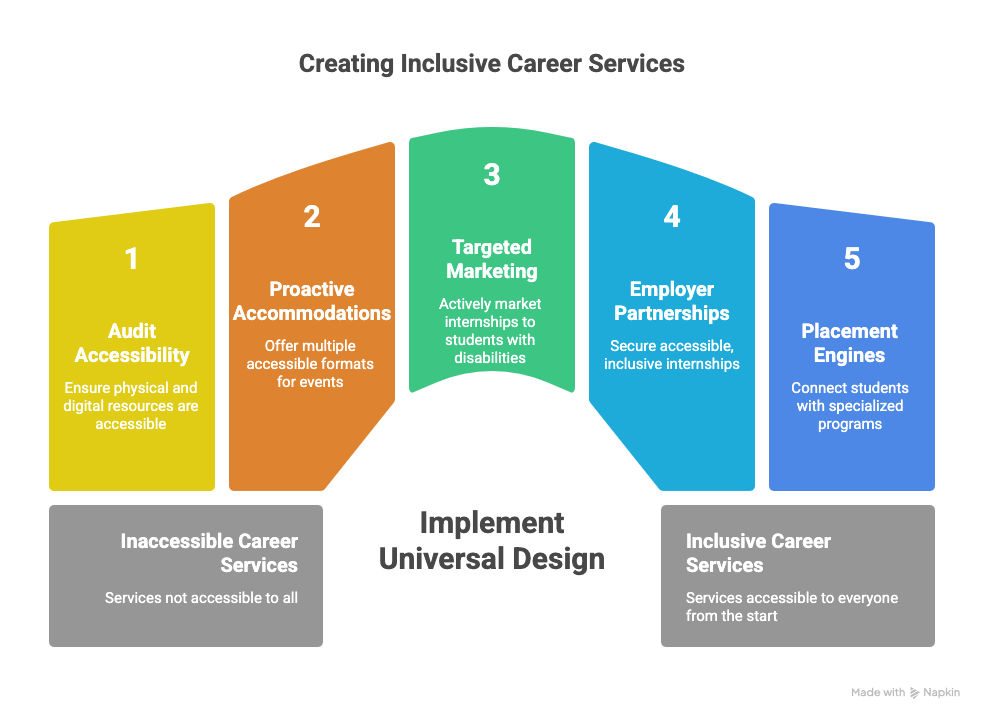
Universal design means creating physical and digital career resources accessible to everyone from the start, bypassing the need for individual accommodations. This includes adjusting physical office layouts, ensuring career platforms are screen-reader compatible, and proactively offering multiple accessible formats for resume workshops, career fairs, and networking events.
Do not wait for a student to request an accommodation to make your services usable.
The University of Washington's DO-IT (Disabilities, Opportunities, Internetworking, and Technology) Center heavily emphasizes this, noting that career services must audit their own accessibility, according to their published guidelines.
This means ensuring interview prep rooms have adjustable-height tables, keeping aisles clear for wheelchair users, and verifying that all virtual career fair platforms seamlessly integrate with assistive technology.
When promoting events, explicitly include a frictionless way to request additional disability-related accommodations in the marketing materials.
Also Read: How to prepare first gen students for career fairs?
How do we increase participation in work-based learning?
You must actively market internships directly to students with disabilities, as many assume these programs exclude them. Leverage targeted federal initiatives like the Workforce Recruitment Program and establish dedicated employer partnerships to secure accessible, inclusive internships, cooperative education, and low-barrier job shadowing opportunities for your student cohorts.
Work-based learning (WBL) allows students to practice disclosing their disabilities and requesting accommodations in a low-stakes environment before graduation.
Connect your students with massive placement engines.
For instance, Tufts University actively funnels students into specialized programs like BroadFutures (paid internships for students with learning disabilities) and Entry Point! (STEM internships via the AAAS), according to the Tufts Career Center.
You should also heavily utilize the Workforce Recruitment Program (WRP), which connects federal and private-sector employers nationwide with highly motivated college students and recent graduates with disabilities.
How should we prepare neurodivergent students for interviews?
Shift the focus from generic interview advice to specialized self-advocacy and disclosure strategies. Train neurodivergent students on exactly how and when to request reasonable accommodations during the hiring process. Use targeted tools like virtual job simulations and partner directly with inclusive employers who utilize alternative, skills-based interview formats.
The number of neurodivergent students is rising rapidly, and traditional behavioral interviews (which heavily judge eye contact and tone) actively screen them out.
Train your students to identify disability-friendly employers.
For example, Microsoft runs specific Autism Hiring events focused on software engineer candidates that bypass traditional interviews entirely, according to Johns Hopkins.
Teach your students how to review a company's career page for disability-inclusive statements, flexible work policies, and transparent accommodation request processes.
NACE research indicates that teaching these specific disclosure and self-advocacy strategies directly improves placement outcomes for neurodiverse populations.
Wrapping Up
Supporting disabled students effectively requires a career readiness system built for consistency, accessibility, and scale.
When career centers can connect assessment, preparation, practice, and advising in one place, they are far better positioned to deliver timely support and stronger outcomes for every student.
That is where Hiration can add value. Hiration offers a full-stack career readiness suite that supports the full student journey, from Career Assessments to AI-powered Resume Optimization, Interview Simulation, and more, alongside a dedicated Counselor Module for managing cohorts, workflows, and analytics.
Built with FERPA and SOC 2-compliant safeguards, it can help career teams expand support without losing visibility or control.
As expectations around inclusive student support continue to rise, the institutions that redesign career services with both accessibility and scalability in mind will be better equipped to serve students well.
Career Services for Students with Disabilities — FAQs
Why do students with disabilities face additional barriers in the job market?
Even with a college degree, students with disabilities may encounter inaccessible hiring processes, limited employer preparedness for accommodations, and fewer targeted career preparation resources.
Why should career services rethink traditional advising models?
Standard advising often assumes identical career preparation needs for all students. Students with disabilities may require additional guidance around accessible employers, accommodation requests, and inclusive hiring processes.
How can career centers collaborate with disability services offices?
Collaboration can include joint workshops, shared student support systems, coordinated advising, and employer outreach initiatives that specifically promote inclusive hiring opportunities.
What does Universal Design look like in career services?
Universal Design involves making career resources accessible from the start, including accessible websites, inclusive event formats, assistive-technology compatibility, and physical spaces designed to accommodate a wide range of needs.
How can career centers increase participation in internships for disabled students?
Career centers can actively promote inclusive internships, connect students with targeted programs and employer partners, and ensure internship opportunities clearly communicate accommodation support.
How should advisors prepare neurodivergent students for interviews?
Advisors can focus on self-advocacy strategies, disclosure timing, accommodation requests, and practice interviews that reflect alternative or skills-based hiring formats used by inclusive employers.
Why is work-based learning particularly valuable for students with disabilities?
Internships, co-ops, and job shadowing allow students to gain experience, test workplace accommodations, and build professional confidence before entering full-time employment.
What long-term changes should career centers implement to improve accessibility?
Long-term improvements include accessible advising systems, inclusive employer partnerships, coordinated campus support, and scalable career preparation tools that support students with diverse abilities throughout their career journey.