How should career centers support student-athlete career readiness?
Career centers should support student-athlete career readiness by adapting delivery, timing, advising, experience-building, and progress tracking around the realities of athletic schedules. Student-athletes still need career exploration, resumes, LinkedIn profiles, cover letters, interviews, networking, and work experience, but standard programming often assumes students can attend during office hours, complete long workshops, and pursue conventional internships. A stronger model starts early, changes across the athletic calendar, uses short and flexible assignments, translates athletic experience into credible workplace evidence, creates experience options that fit training and competition demands, and gives career teams visibility into which student-athletes need support before graduation.
If your career center is trying to improve career readiness for student-athletes, the problem is rarely a lack of discipline, motivation, or transferable experience.
The problem is that standard career programming often assumes students can attend during office hours, complete long workshops, pursue conventional semester-long internships, and separate career exploration from the identity they have built through sport.
Student-athletes need the same core career support as other students, but it must account for training, competition, travel, recovery, academic work, and fixed eligibility timelines. They also need help converting athletic experience into credible evidence employers can understand without relying on vague claims about leadership or teamwork.
This guide explains how career teams can adapt exploration, advising, experience-building, skill translation, alumni support, and progress tracking around the realities of student-athletes.
What Should Career Centers Adapt for Student-Athletes?
Career centers should adapt how and when support is delivered, not create a completely separate definition of career readiness. Student-athletes still need exploration, experience, professional materials, networks, and interview preparation. The operating model must make those services accessible within the athletic calendar.
| Student-athlete consideration | Career-readiness implication | Career-center response |
|---|---|---|
| Training and competition during office hours | Appointments and workshops may be difficult to attend | Offer satellite advising, team sessions, virtual appointments, and asynchronous support |
| Travel and changing weekly schedules | Long programs may be difficult to complete consistently | Break activities into short modules with clear deadlines |
| Strong identification with sport | Career exploration may feel disconnected from the student’s current life | Begin exploration early and connect it to interests inside and outside athletics |
| Limited availability for conventional internships | Students may need alternative ways to build experience | Offer job shadowing, employer projects, campus roles, short internships, and intensive summer options |
| Athletic experience dominates the resume | Students may struggle to present evidence relevant to employers | Use structured competency translation based on real actions and outcomes |
| Eligibility ends at a defined point | The transition from competition can feel sudden when planning begins late | Introduce career development before the final year |
| Coaches and athletics staff are trusted messengers | Career-center communication alone may not drive participation | Coordinate timing, messaging, and follow-up with athletics |
The goal is to remove delivery barriers that prevent them from completing the same career-development work expected of other students.
Why Does Student-Athlete Career Readiness Require a Different Operating Model?
Student-athlete support should account for limited schedule control, recurring travel, public performance pressure, physical recovery, and the central role sport may play in a student’s identity. A standard referral to the career center may be technically available but still difficult for the student to use consistently.
The model should therefore rely less on students independently finding time for optional services and more on:
- Career activities scheduled around team calendars
- Short assignments that can be completed between commitments
- Virtual and asynchronous access during travel
- Repeated exposure across class years
- Career conversations delivered through familiar athletics channels
- Clear milestones rather than one-off event attendance
- Experience options that do not require identical weekly availability
This does not mean every student-athlete needs intensive coaching. Some may already have strong professional networks, internships, and clear career goals.
The operating model should help the career team distinguish between students who need basic access, students who need help translating their experience, and students approaching graduation without a credible transition plan.
When Should Career Development Begin for Student-Athletes?
Career development should begin when student-athletes enter the institution, but the expectations should change as they progress. First-year students need low-pressure exploration. Students approaching graduation need evidence, professional materials, networks, interview preparation, and a defined post-college plan.
| Student stage | Career-readiness priority | Appropriate activities |
|---|---|---|
| Entry and first year | Broaden identity and introduce career resources | Strengths reflection, interest exploration, alumni stories, career-center orientation, and one advisor interaction |
| Early exploration | Connect interests with occupations and industries | Job shadowing, career comparisons, employer conversations, introductory projects, and alumni panels |
| Experience building | Develop evidence beyond athletic participation | Internships, campus roles, research, employer projects, leadership, and structured alumni mentoring |
| Transition and execution | Convert experience into applications and decisions | Resume tailoring, LinkedIn optimization, interview practice, networking, job targeting, and graduate-school planning |
The progression should not assume that every athlete has selected a career direction by a particular year. Students change majors, transfer institutions, experience injuries, gain or lose eligibility, and revise their professional goals.
The purpose of an early start is to create repeated opportunities for exploration before the student faces an urgent transition.
Career teams can use a broader career exploration advisor framework to structure those conversations while adapting the timing and delivery for athletes.
How Should Advisors Address Athletic Identity Foreclosure?
Advisors should help student-athletes explore additional identities without treating attachment to sport as a problem. Athletic identity foreclosure has a more specific meaning than simply caring deeply about athletics: it refers to commitment to the athlete role without sufficient exploration of occupational or other identity alternatives.
Career teams should not diagnose students or assume that every athlete has delayed career development.
Instead, advisors can create regular opportunities for students to consider:
- Which parts of athletics they find most meaningful
- Which responsibilities they want to carry into a career
- Which interests receive little attention during the season
- Which occupations connect with those interests
- Which workplace environments resemble or differ from their athletic experience
- Which communities and roles matter to them outside sport
- What they want to learn before their eligibility ends
The language used in these conversations is important.
“Life after sport” can make career development sound like an admission that the athletic goal is ending. A more useful framing is parallel preparation: students can pursue athletic ambitions while also building options for employment, entrepreneurship, graduate education, public service, or another direction.
The NCAA currently estimates that approximately 1.4% of NCAA football players, 1% of men’s basketball players, and 0.8% of women’s basketball players are drafted into the major professional leagues included in its analysis.
The NCAA notes that these estimates do not cover every professional opportunity.
These figures should not be used to dismiss professional aspirations. They can help normalize the idea that career exploration is part of responsible preparation for nearly every student-athlete, including those with a realistic chance of competing professionally.
How Should Career Programming Change Across the Athletic Calendar?
Career programming should change with the season rather than expect the same level of participation throughout the year. In-season programming should focus on short, accessible actions. Off-season periods should be used for deeper exploration, professional experiences, and application preparation.
What Should Happen Before the Season?
The pre-season period can be used to establish one realistic career objective for the upcoming term.
Career teams can:
- Complete a short career-status check
- Identify students approaching internships, graduation, or eligibility completion
- Introduce available career resources
- Set one student-specific milestone
- Confirm the best communication channel
- Schedule team sessions before travel intensifies
- Identify students who require individual follow-up
A first-year student’s goal may be completing an interest reflection. A junior may need to identify summer experience options. A senior may need a resume, target-role list, and application schedule.
What Should Happen During the Season?
In-season programming should limit cognitive and scheduling demands while maintaining visible progress.
Useful activities include:
- Fifteen- to thirty-minute team sessions
- Resume or LinkedIn assignments that can be completed asynchronously
- Short virtual advising appointments
- Recorded employer or alumni conversations
- Interview questions students can practise independently
- One-step outreach activities
- Mobile access to career resources during travel
Career teams should avoid scheduling a multiweek workshop series during the busiest competitive period and then interpreting low attendance as a lack of interest.
What Should Happen During the Off-Season?
The off-season provides more room for activities requiring sustained time or coordination.
Career teams can prioritize:
- Job shadowing
- Employer projects
- Internships
- Alumni mentoring
- Career exploration appointments
- Resume and LinkedIn development
- Mock interviews
- Employer visits
- Graduate-school preparation
- Job-search planning
The annual program calendar should identify these windows by sport. A single institution-wide definition of “off-season” will not reflect the schedules of every team.
How Can Advisors Translate Athletic Experience Without Exaggerating It?
Advisors should translate specific athletic responsibilities into workplace evidence, not replace sports terminology with inflated corporate language. The student must be able to explain what happened, what they personally did, and what changed because of their actions.
More than 90% of student-athletes in the NCAA’s recent GOALS study said college athletics had a positive impact on career-applicable qualities such as work ethic, responsibility, and teamwork. Nearly two-thirds of respondents to a separate NCAA survey felt positive or very positive about their career prospects.
The challenge is not necessarily developing the qualities. It is demonstrating them with credible evidence.
| Athletic context | Observable action | Relevant competency | Employer-facing evidence |
|---|---|---|---|
| Reviewing game film | Identified patterns and adjusted preparation | Critical thinking | Used performance evidence to identify recurring problems and modify a plan |
| Returning after an injury | Followed a recovery plan and adapted responsibilities | Resilience and self-management | Maintained progress against a long-term plan while responding to changing constraints |
| Serving as captain | Communicated expectations and addressed team issues | Leadership and communication | Coordinated peers, communicated priorities, and supported accountability |
| Learning a new system | Applied coaching feedback during practice and competition | Career and self-development | Incorporated frequent feedback to improve performance in a changing environment |
| Balancing travel and coursework | Planned deadlines around fixed commitments | Organization and professionalism | Managed competing responsibilities and completed work against non-negotiable deadlines |
| Preparing for an opponent | Researched tendencies and contributed to a tactical plan | Analysis and teamwork | Gathered relevant information and collaborated on an evidence-based response |
| Supporting newer teammates | Explained routines, expectations, and resources | Mentoring and communication | Helped new members understand processes and integrate into a high-expectation environment |
Every translated statement must remain accurate.
For example, an athlete should not claim to have analysed complex data if they reviewed film but did not work with data sets. They should not claim to have managed a team if they held no formal or informal responsibility for coordinating others.
A practical advising exercise uses five questions:
- What was happening?
- What responsibility did the student personally hold?
- What action did the student take?
- What changed because of that action?
- Where would the same behavior be useful in the target role?
The answers can then be adapted for a resume bullet, LinkedIn profile, cover letter, networking introduction, or interview response.
Career teams can connect this exercise with their broader NACE career-readiness competency framework that identifies eight competencies, including communication, critical thinking, teamwork, leadership, professionalism, technology, equity and inclusion, and career and self-development.
What Should Student-Athlete Resume and Interview Coaching Emphasize?
Resume and interview coaching should help student-athletes provide evidence beyond participation, awards, or the number of years they competed. Employers need to understand the student’s responsibilities, decisions, contribution, and results in language relevant to the target role.
Resume Coaching
Instead of:
Played linebacker for four years and demonstrated teamwork and discipline.
Use a claim grounded in the athlete’s actual experience, such as:
Reviewed game film with position-group members, identified recurring execution issues, and incorporated coaching feedback into weekly preparation.
Another student may write:
Coordinated communication between coaches and teammates as team captain, reinforced weekly priorities, and supported the onboarding of new team members.
The strongest bullet depends on what the student genuinely did.
Advisors should also prevent athletics from occupying the entire resume when the student has relevant coursework, projects, employment, volunteering, research, leadership, or technical experience.
Interview Coaching
Athletes may default to stories about winning, losing, or working hard. Advisors should push for more precise evidence:
- What decision did the student make?
- What changed during the situation?
- How did the student respond to feedback?
- What conflict or constraint had to be managed?
- What did the student learn?
- How was that learning applied later?
A shared mock interview rubric can help advisors evaluate whether the student explains the situation, action, reasoning, and result rather than relying on broad claims about resilience or teamwork.
Which Career Experiences Fit Student-Athlete Schedules?
Career teams should build a portfolio of experiences rather than treat a traditional semester-long internship as the only credible option. Different formats can provide exposure, evidence, professional contacts, and role clarity at different points in the athletic calendar.
The time ranges below are suggested planning ranges. Actual commitments should be determined with the employer, student, athletics staff, and relevant institutional offices.
| Experience option | Suggested planning range | Best timing | Evidence the student may gain |
|---|---|---|---|
| Job shadowing | Half day to two days | In-season break or off-season | Workplace exposure, occupational knowledge, professional questions |
| Alumni career conversation | One or two short meetings | Any period with advance scheduling | Industry insight, career vocabulary, networking practice |
| Employer-sponsored project | 10 to 40 hours | Off-season or distributed across several weeks | Work sample, problem-solving evidence, employer feedback |
| Micro-internship | Short, defined project period | Off-season, academic break, or lighter competitive window | Applied experience, deliverable, professional reference |
| Paid on-campus role | Five to ten hours per week | Academic term where schedule permits | Work history, accountability, campus network |
| Athletics-department internship | Defined weekly schedule | Summer or off-season | Operations, marketing, communications, events, administration |
| Research or faculty project | Project-dependent | Academic term or summer | Analysis, writing, technical skills, faculty reference |
| Intensive summer internship | Eight to twelve weeks | Summer where training requirements permit | Deeper experience, professional network, sustained contribution |
| Industry sprint or employer challenge | One day to several weeks | Academic break or off-season | Team project, presentation, role exposure |
Short experiences should not be treated as inherently inferior. Their value depends on whether the student completes meaningful work, receives feedback, produces evidence, and can explain the experience.
Career centers developing short project-based opportunities can use this broader guide to micro-internships without reproducing the complete program-design process inside the student-athlete initiative.
How Should Career Services and Athletics Divide Responsibility?
Career services should retain responsibility for career-development standards, advising quality, employer preparation, and progress measures. Athletics should provide schedule intelligence, trusted communication channels, team context, and support for participation. The partnership works when responsibilities are explicit rather than described only as collaboration.
| Responsibility | Career services | Athletics |
|---|---|---|
| Career curriculum | Designs activities, learning goals, and advising standards | Identifies appropriate timing and team context |
| Student communication | Supplies clear messages, resources, and action instructions | Reinforces participation through coaches and athletics staff |
| Individual advising | Provides career-development expertise | Identifies students who may need support |
| Program scheduling | Offers flexible delivery options | Shares training, competition, travel, and recovery windows |
| Employer engagement | Sources and prepares appropriate opportunities | Opens athletics-specific employer and sponsor relationships where appropriate |
| Alumni engagement | Structures career conversations and mentor expectations | Identifies former student-athletes and trusted alumni |
| Experience development | Defines professional standards and learning expectations | Identifies internal athletics roles and workable time commitments |
| Progress tracking | Tracks career milestones and support needs | Supports follow-up and participation |
| Escalation | Handles career-related barriers and referrals | Handles athletics, team, eligibility, or welfare concerns |
The career center should not rely on coaches to deliver professional advising. Athletics staff should not be expected to evaluate resumes, select occupations, or manage employer-readiness standards unless those responsibilities are formally part of their role.
The partnership can operate at three resource levels.
Minimum-Resource Model
A minimum-resource model may include:
- One designated career-center liaison
- One planning meeting with athletics each term
- Team-based workshops
- Virtual advising access
- One annual career-status check
- Shared referral procedures
- An athlete-specific resource page
This model does not require a full-time employee inside athletics.
Shared-Support Model
A shared model may add:
- Regular satellite advising hours
- A coordinated annual programming calendar
- Athlete-specific employer and alumni events
- Short experience programs
- Class-year milestones
- Shared participation reporting
- Targeted follow-up for students approaching graduation
Dedicated Model
A dedicated model may include:
- A career professional housed within athletics
- Athlete-specific advising and programming
- Dedicated employer relationships
- Alumni mentoring
- Internships designed around athletic schedules
- Online access during travel
- Athlete-specific progress reporting
The appropriate model depends on student volume, staffing, athletics resources, institutional structure, and the level of career support already available.
What Can Career Centers Learn From University Programs?
University examples show that student-athlete career readiness can be delivered through different resource models. The most transferable lessons concern scheduling, access, experience design, advising ownership, and alumni involvement rather than program branding.
| Institution | Model to examine | Lesson for career teams |
|---|---|---|
| University of Michigan M-PACT | Customized career services designed around student-athlete schedules, employer and mentor connections, and an online system accessible during travel | Career support can remain available throughout the athletic experience rather than depend on office-hour attendance. |
| Ohio State Bucks Go Pro | Eight-week on-campus and athletics internships combined with professional development, plus a flexible corporate internship option | Institutions can design substantial work experience around summer and athlete-specific scheduling constraints. |
| University of Delaware | Dedicated student-athlete career-readiness services combining individual coaching, exploration, mentoring, job shadowing, internships, and networking | Athlete support can connect advising with several forms of experience rather than rely on workshops alone. |
| Wesleyan University Athletics Advantage | Career coaching, alumni mentoring, internships, job shadowing, community service, and career-focused content | A broad student-athlete development model is possible outside a large Division I athletics department. |
Career teams do not need to reproduce these programs in full. A more useful starting point is identifying one operating feature the institution can support, such as satellite advising, summer experiences, alumni job shadowing, or access to career tools during travel.
How Should Career Centers Start With Limited Resources?
Career centers with limited capacity should begin with a small number of repeatable actions rather than launch a separate full-scale career program. One liaison, one annual status check, one in-season activity, one off-season experience option, and one shared dashboard can establish a workable foundation.
A practical first cycle could include:
- Appoint one career-center liaison for athletics.
- Map training and competition periods by sport.
- Ask each student-athlete to complete a short career-status check.
- Deliver one athlete-specific skill-translation session.
- Offer virtual or satellite advising during a high-demand period.
- Create one short experience option for the off-season.
- Connect interested students with former student-athletes.
- Track completion of exploration, materials, experience, and transition milestones.
- Review participation and gaps with athletics after the cycle.
The first cycle should reveal where the largest barrier exists.
For one institution, the main problem may be appointment access. For another, students may attend programming but graduate without applied experience. A third may have strong internship participation but weak resume and interview translation.
The program should expand only after the team knows which problem it is trying to solve.
Wrapping Up
Student-athlete career readiness requires more than a motivational workshop near graduation.
It requires career support that begins early, changes across the athletic calendar, creates workable experience options, and helps students translate what they have done into evidence employers can evaluate.
The strongest operating models do not force students to choose between athletic ambition and career preparation. They make steady professional development possible alongside competition.
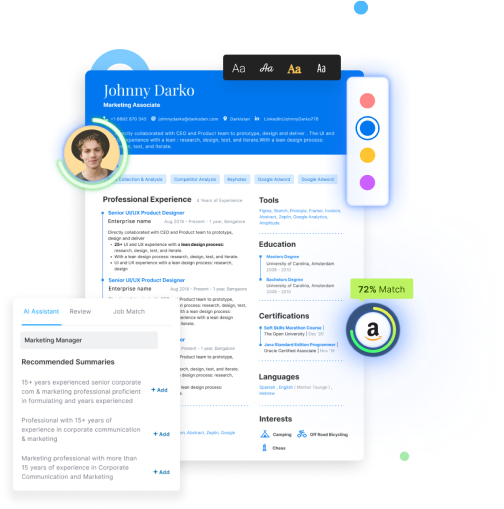
Hiration can reinforce this work by giving student-athletes on-demand support across career exploration, resumes, LinkedIn profiles, cover letters, interviews, and job targeting, while the Counselor Module gives career teams visibility into student activity, progress, and support needs within a FERPA- and SOC 2-aligned platform.
Student-Athlete Career Readiness — FAQs
What is student-athlete career readiness?
Student-athlete career readiness means helping student-athletes explore career options, build professional materials, gain relevant experience, translate athletic skills into workplace evidence, prepare for interviews, and develop a post-college plan while accounting for training, competition, travel, recovery, academics, and eligibility timelines.
What should career centers adapt for student-athletes?
Career centers should adapt how and when support is delivered. Student-athletes still need the same core career-development support as other students, but services should be scheduled around athletic calendars, made available virtually or asynchronously, broken into shorter assignments, and connected to clear readiness milestones.
Why do student-athletes need a different career readiness model?
Student-athletes often have less schedule control because of practice, competition, travel, recovery, academic work, and team commitments. A standard referral to the career center may be available on paper but difficult to use consistently without flexible delivery, repeated exposure, and coordinated support from athletics.
When should career development begin for student-athletes?
Career development should begin when student-athletes enter the institution. Early support should focus on low-pressure exploration and identity development, while later support should focus on professional materials, experience, networking, interview preparation, job search, graduate school, or another defined post-college plan.
How should advisors address athletic identity foreclosure?
Advisors should help student-athletes explore additional identities and career options without treating commitment to sport as a problem. A useful approach is parallel preparation: students can pursue athletic goals while also building options for employment, graduate education, entrepreneurship, public service, or another path.
How should career programming change during the athletic season?
In-season programming should focus on short, accessible actions such as brief team sessions, asynchronous resume or LinkedIn assignments, virtual advising, recorded alumni conversations, independent interview practice, and one-step outreach activities. The goal is to maintain progress without overloading students during peak athletic demands.
What should career centers prioritize during the off-season?
The off-season is better suited for deeper activities such as job shadowing, employer projects, internships, alumni mentoring, career exploration appointments, resume and LinkedIn development, mock interviews, employer visits, graduate-school preparation, and job-search planning.
How can advisors help student-athletes translate athletic experience?
Advisors should help student-athletes translate specific responsibilities into workplace evidence. The process should identify what was happening, what responsibility the student personally held, what action they took, what changed because of that action, and where the same behavior would be useful in the target role.
What should student-athlete resume coaching emphasize?
Resume coaching should move beyond participation, awards, or years competed. Advisors should help student-athletes describe specific responsibilities, decisions, actions, collaboration, feedback use, leadership moments, preparation habits, and results in language that is accurate and relevant to the target role.
What should student-athlete interview coaching emphasize?
Interview coaching should help student-athletes avoid broad claims about hard work, resilience, leadership, or teamwork and instead explain specific situations, decisions, constraints, actions, feedback, outcomes, and lessons learned. The strongest answers show reasoning and evidence, not only athletic commitment.
Which career experiences fit student-athlete schedules?
Career centers should offer a portfolio of experience options rather than rely only on traditional semester-long internships. Useful formats may include job shadowing, short projects, micro-internships, alumni conversations, employer visits, off-season internships, campus-based projects, virtual experiences, and structured career assignments.
How should career services and athletics divide responsibility?
Career services should own career-development standards, advising quality, employer preparation, and progress measures. Athletics should provide schedule intelligence, team context, trusted communication channels, and support for participation. The partnership works best when responsibilities are explicit rather than described only as collaboration.
What is a minimum-resource model for student-athlete career support?
A minimum-resource model may include one career-center liaison, one planning meeting with athletics each term, team-based workshops, virtual advising access, one annual career-status check, shared referral procedures, and an athlete-specific resource page.
What is a dedicated student-athlete career support model?
A dedicated model may include a career professional housed within athletics, athlete-specific advising and programming, employer relationships, alumni mentoring, internships designed around athletic schedules, online access during travel, and athlete-specific progress reporting.
How can career centers start with limited resources?
Career centers can start by appointing one athletics liaison, mapping training and competition periods by sport, running a short career-status check, delivering one skill-translation session, offering virtual or satellite advising, creating one off-season experience option, and tracking readiness milestones.
What should career teams track for student-athlete readiness?
Career teams should track exploration activity, resume or LinkedIn completion, advising participation, experience-building, interview preparation, alumni engagement, job or graduate-school planning, students approaching eligibility completion, and student-athletes who may need follow-up before transition points.
How can Hiration support student-athlete career readiness?
Hiration can support student-athletes with on-demand career exploration, resumes, LinkedIn profiles, cover letters, interviews, and job targeting. Its Counselor Module also gives career teams visibility into student activity, progress, and support needs within a FERPA- and SOC 2-aligned platform.