How can career centers build career readiness for student-athletes beyond the standard playbook?
Career readiness for student-athletes improves when career services adapts to athletic realities: limited time windows, rigid schedules, and identity pressure. The most effective approach is to meet athletes where they are through short-burst coaching, embedded programming inside athletics, flexible experiential options like micro-internships, and structured support that helps them translate athletic performance into employer language and job-ready evidence.
As a College Career Services Professional, you know the standard playbook doesn't work for student-athletes.
They are overburdened, time-poor, and often psychologically siloed from the rest of the campus experience.
Yet, they possess raw traits employers fight over - if only they could articulate them.
Your challenge isn't teaching them discipline; it’s translating their athletic existence into a compelling professional narrative.
This guide ditches the generic advice to provide actionable, research-backed strategies for elevating student-athlete career readiness.
Why is the standard university career services model failing student-athletes?
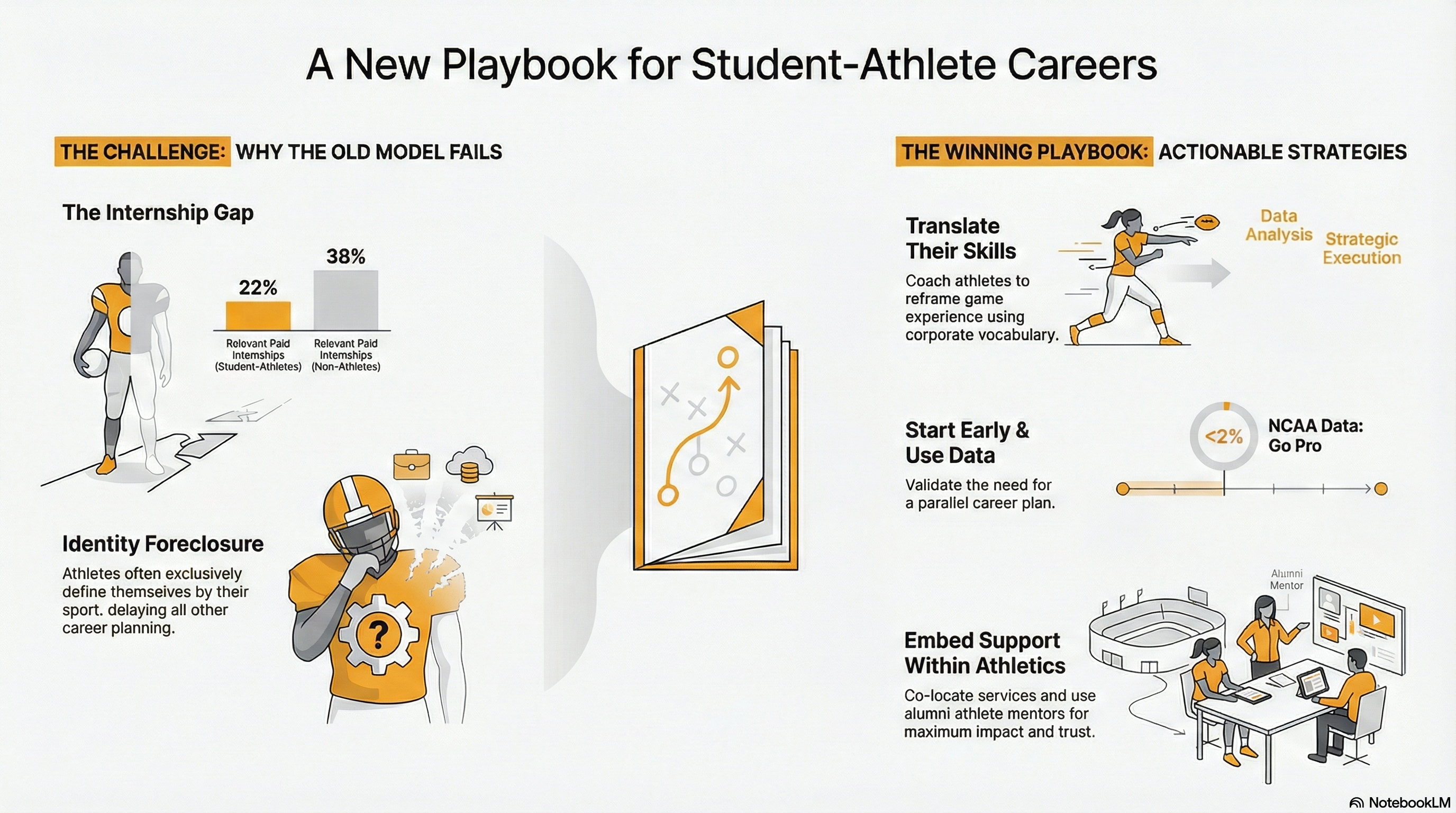
The traditional "come to us during business hours" model is structurally incompatible with the rigid demands of NCAA Division I, II, or III athletics. Furthermore, athletes often suffer from "identity foreclosure," exclusively defining themselves by their sport, which delays engagement with career planning until eligibility expires.
According to a major NCAA/Gallup survey of college graduates, while former student-athletes often report higher well-being later in life, they are significantly less likely to have had a paid internship that applied what they were learning in the classroom compared to non-athletes (22% vs. 38%).
This isn't just a scheduling conflict; it’s an experiential deficit.
The standard model assumes students have free blocks of time for 20-hour-a-week internships. Athletes do not.
Career services must stop pushing standard internship models and start advocating for micro-internships, job shadowing, and embedded departmental roles that fit around training blocks.
Also Read: How career centers can support seniors without jobs before graduation?
How do we combat "athletic identity foreclosure" in career coaching?
Identity foreclosure occurs when athletes commit to their athletic persona so strongly they fail to explore other career identities. Combat this by reframing career development not as "life after sports," but as "dual-career development" that enhances their current performance by reducing anxiety about the future. Start immediately during freshman year.
Many student-athletes cling to the professional sports dream as a defense mechanism against the terrifying unknown of a regular career. You must use data to gently ground them without crushing their aspirations.
NCAA recruiting facts presents the harsh reality: less than 2% of NCAA football players and 1.2% of men's basketball players will play professionally.
You need to present these stats early, not to discourage them, but to validate the necessity of a parallel plan.
Successful universities integrate career messaging during recruitment and orientation.
For example, the University of Michigan’s "M-PACT" program structures career development across four years, moving from self-awareness in year one to execution in year four, ensuring career identity grows alongside athletic identity.
Don't wait until senior year; by then, the foreclosure is often too deep.
Also Read: How to build a skills first goal setting workshop?
What specific "hidden" skills do employers actually value in athletes?
Move beyond generic buzzwords like "teamwork" and "time management." Employers highly value athlete-specific traits like extreme coachability (taking harsh feedback without ego), resilience in high-stakes public environments, rapid failure recovery during competition, and operational agility. You must teach athletes the corporate vocabulary for these visceral experiences.
Athletes already have high career readiness competencies as defined by NACE, particularly in teamwork and critical thinking.
The failure is in translation.
An athlete will say on a resume: "Played linebacker for 4 years." You can coach them to write: "Analyzed complex, real-time data sets under extreme time pressure toexecute strategic defensive maneuvers in high-stakes environments."
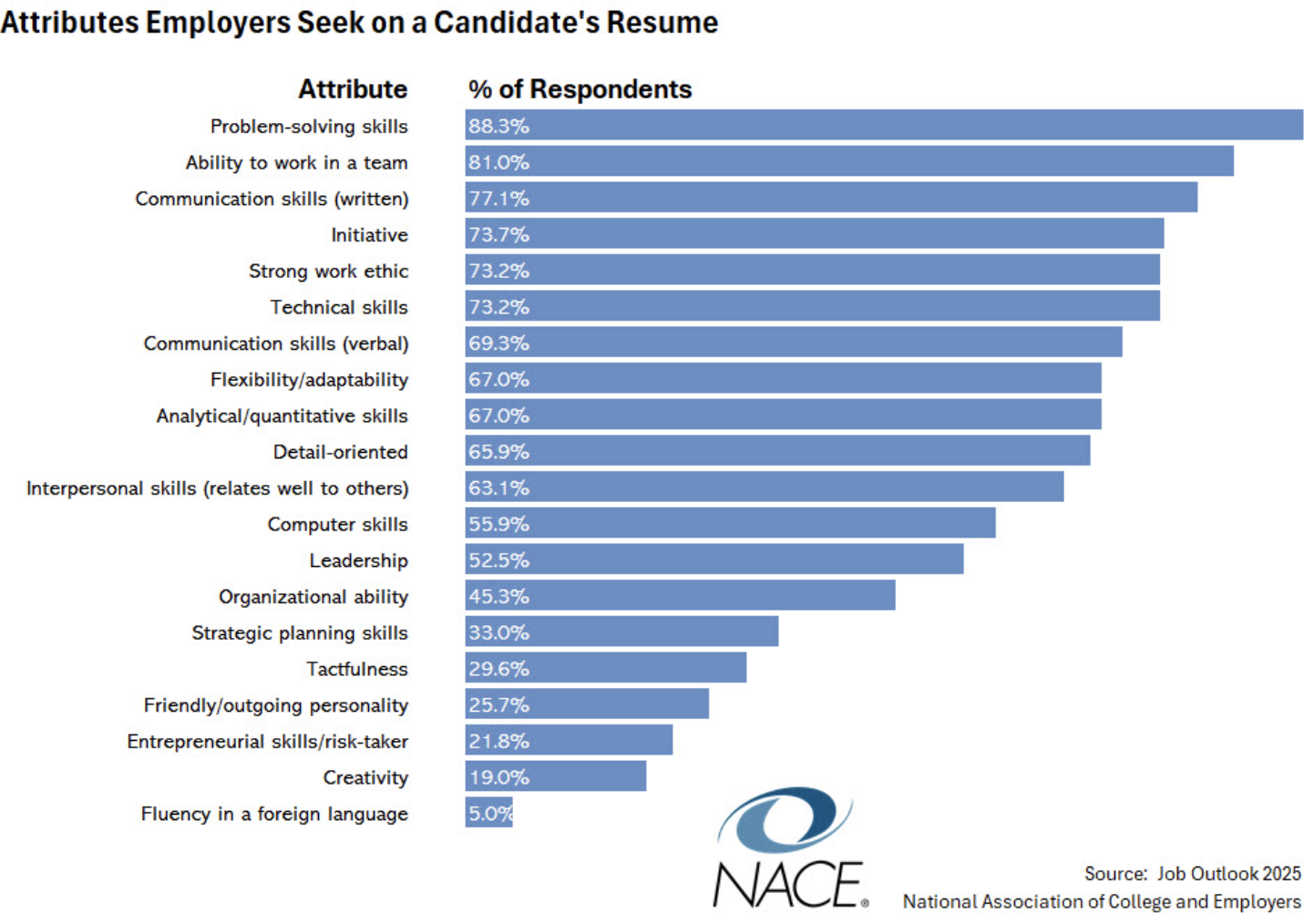
According to NACE’s Job Outlook 2024 survey, over 88.3% of employers are looking for evidence of "ability to work in a team" and 76% seek "problem-solving skills.".
Athletes practice this daily.
Your coaching sessions must focus intensely on behavioral interviewing prep using the STAR method, forcing them to pull examples from practice and games that demonstrate resilience and coachability, not just winning.
Also Read: How can career services close the equity gap for FGLI students?
What actionable program structures yield the best results for this population?
The most effective programs embed career services physically within the athletic department and utilize former student-athlete mentors. Co-location removes friction, while alumni mentors provide credible proof that a successful transition is possible. Programs must be high-touch, mandatory, and delivered in short bursts.
If your university has the resources, hire a dedicated career liaison housed within the athletic training complex. If not, establish "satellite hours" where you are physically present in their space two evenings a week.
Mentorship is arguably the most powerful tool. Current athletes are skeptical of academic staff who haven't "lived the life."
According to a research report by the EY Women Athletes Business Network and ESPN W, 54% of female executives surveyed played sports at the university level, highlighting a massive, often untapped alumni network for mentorship.
Look at The Ohio State University’s "Buckeyes Go Pro" program. They created a structured internship program within the athletics department itself.
This provides professional experience that acknowledges and works around their rigid schedules.
Replicate this by partnering with your own athletic communications, marketing, or operations departments to create internal, flexible internships specifically for your athletes.
Also Read: What are some good icebreakers for career coaching sessions?
Wrapping Up
Supporting student-athletes effectively requires more than good intentions or one-off programs.
It demands systems that meet them where they are - on irregular schedules, under constant performance pressure, and navigating multiple identities at once.
The most successful career teams are those that pair high-touch coaching with tools that quietly extend their reach beyond office hours.
That’s where Hiration can reinforce the work you’re already doing.
By giving student-athletes structured, ethical AI-powered support across self-assessment, exploration, resumes, interviews, and job matching - on their own time, it frees career professionals to focus on the conversations that truly matter: reframing identity, translating experience, and guiding confident transitions that last well beyond eligibility.
Student-Athlete Career Readiness — FAQ
Why doesn’t the standard career services model work for student-athletes?
Traditional advising assumes students can attend office-hour appointments and commit to long internship schedules. Student-athletes operate under rigid training, travel, and competition blocks, so the model creates friction that delays career planning.
What is athletic identity foreclosure and why does it matter?
Athletic identity foreclosure is when a student-athlete over-identifies with sport and avoids exploring other career paths. This can delay skill-building, networking, and career decision-making until eligibility ends, increasing underemployment risk.
What’s the best way to introduce career planning without sounding like “life after sports”?
Position it as dual-career development: a parallel plan that reduces anxiety and strengthens performance. Start early, build identity breadth, and treat career readiness as part of the athlete’s overall training system.
Which athlete-specific skills are most valuable to employers?
Employers value athlete traits that translate into workplace performance: coachability, high-pressure decision-making, rapid recovery from failure, resilience under public scrutiny, and operational agility within strict systems.
How can athletes translate sport experience into resume impact?
Replace sport-only descriptions with outcomes and proof. Anchor bullets to decisions, constraints, and results: what they analyzed, what they executed, what changed, and how performance improved—using clear, employer-friendly language.
What kinds of experience work when athletes can’t do 20-hour-a-week internships?
Flexible formats work best: micro-internships, project-based roles, job shadowing, short-term consulting-style assignments, and embedded roles within athletics (operations, marketing, communications) that fit around training blocks.
What program structures drive the strongest outcomes?
Programs perform best when career support is embedded in athletics: co-located advising, satellite hours inside athletic facilities, mandatory short-burst sessions, and mentoring led by former student-athletes who offer credibility and proof.
How should career centers prioritize interview prep for student-athletes?
Focus on rapid story extraction using structured frameworks like STAR. Pull examples from practice, games, leadership roles, and setbacks—then translate them into behaviors employers screen for: problem-solving, teamwork, and resilience.