How can career centers improve career readiness for transfer students on a compressed timeline?
Career centers can improve transfer student outcomes by starting career support before enrollment, embedding readiness into first-semester coursework, and helping students translate prior work, military, and life experience into employer-valued competencies. The goal is to treat transfer readiness as an accelerated integration process, not a delayed version of the traditional student journey.
Transfer students often arrive on campus already behind the traditional career development timeline.
While other students spend their first two years exploring careers, building networks, and preparing for internships, transfer students step into the process midway, often just months before major recruiting cycles begin.
This compressed timeline creates a serious career readiness gap.
Without intentional intervention, transfer students can miss critical milestones like early internship preparation, professional networking, and skill translation.
Read on to explore how career centers can close that gap and help them translate prior experiences into competencies that employers value.
Why are transfer students falling behind in career readiness?
Transfer students arrive on campus with a heavily compressed timeline. They completely bypass the traditional freshman and sophomore career exploration phases. Because of this, they are expected to secure competitive junior-level internships immediately, all while navigating a brand-new academic environment and facing systemic transfer shock.
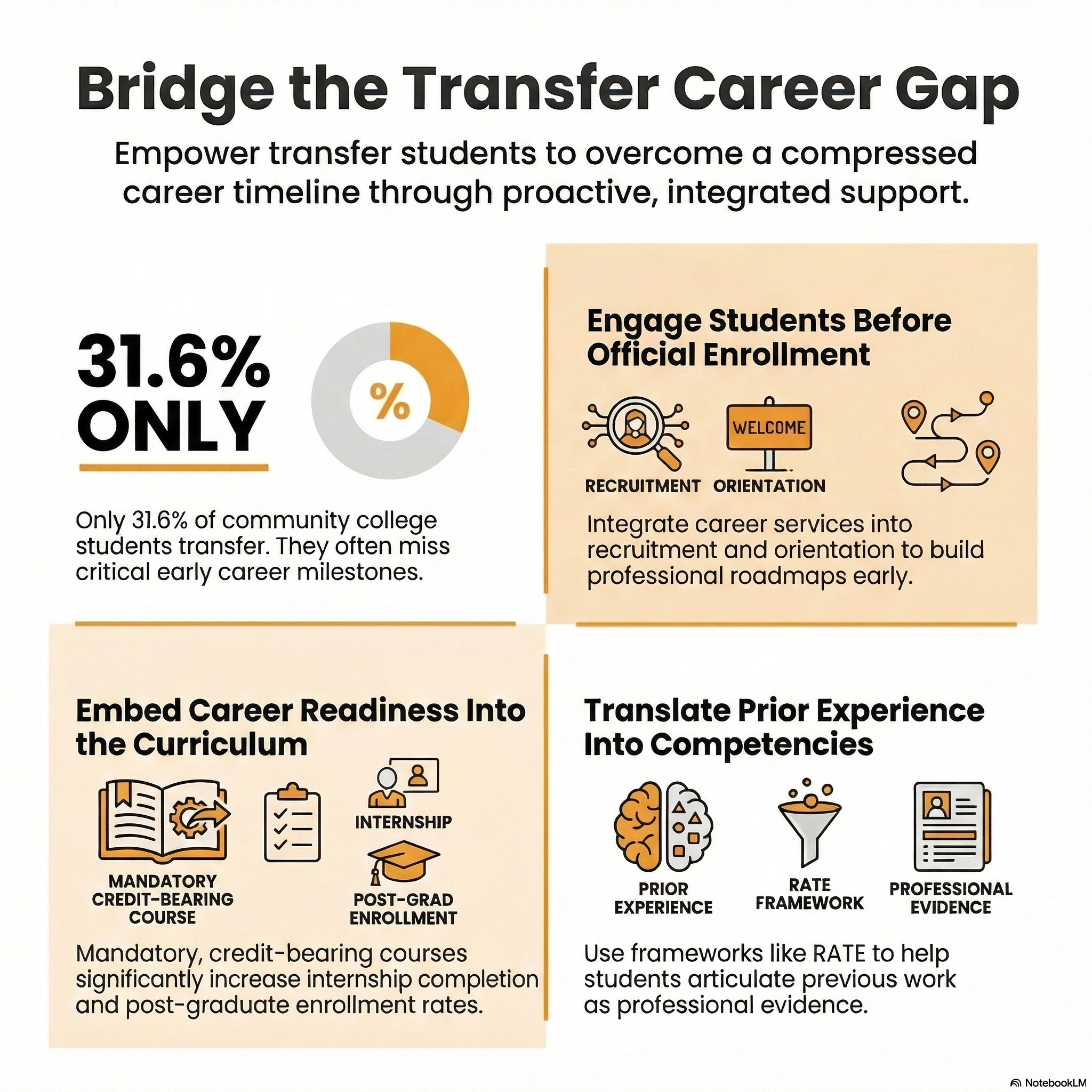
According to a 2024 report by the Community College Research Center (CCRC) and the Aspen Institute, while roughly 80% of community college students aspire to earn a bachelor's degree, only 31.6% successfully transfer.
Furthermore, those who do transition to a four-year institution often miss critical early career interventions.
If a student hasn't started building their network or practicing interview skills by the time they arrive on your campus as a junior, they are already behind the curve for the fall recruiting cycle. We have to accelerate their integration.
When should we introduce career services to transfer students?
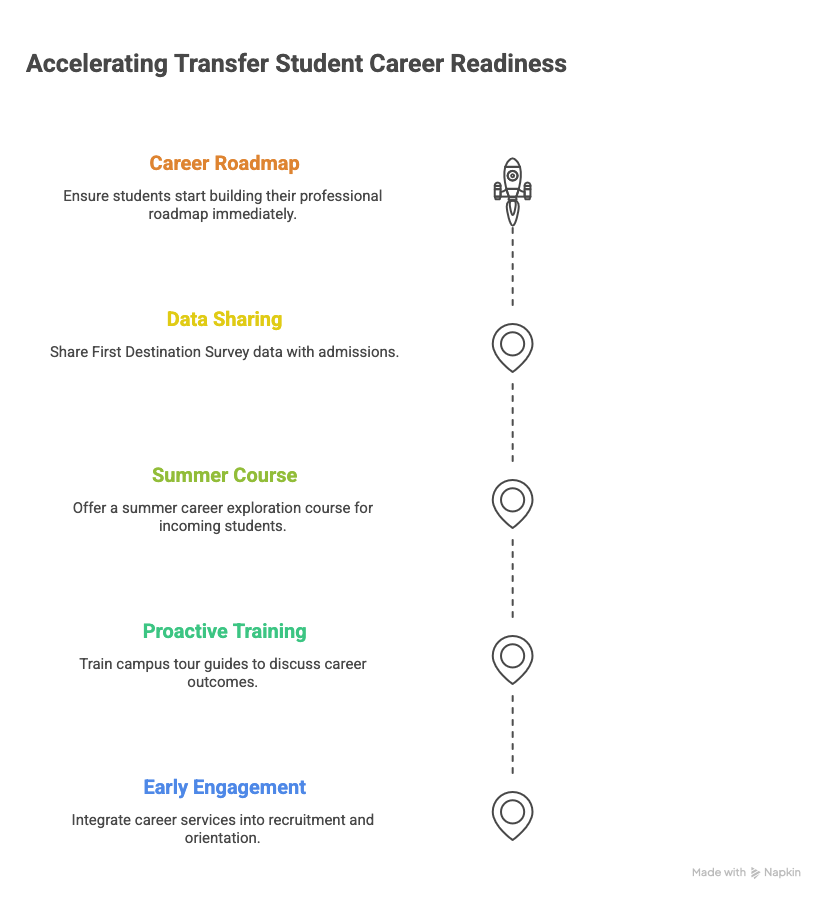
You must engage transfer students before they even officially enroll. By partnering directly with your admissions office to integrate career services into the recruitment and orientation process, you ensure transfer students start building their professional roadmap the exact moment they receive their acceptance letter.
Waiting for them to naturally stumble into your office in the spring is a failing strategy.
Binghamton University provides an excellent real-world example of this proactive approach.
According to uConnect's podcast featuring Binghamton's Career Services, their career center staff participates directly in admitted student events and actively trains campus tour guides to discuss career outcomes.
They even co-coordinate a two-credit online summer career exploration course for incoming students.
By sharing First Destination Survey data with admissions, they set career expectations early and normalize career planning before day one.
How do we embed career readiness into the transfer curriculum?
Integrate mandatory, credit-bearing career courses specifically designed for transfer students into their very first semester on campus. Relying solely on optional workshops simply is not enough. Tying career readiness directly to academic credit ensures overall equity, universal access, and the measurable development of crucial professional competencies.
Creating a targeted curriculum yields massive, measurable dividends. Research from California State University Channel Islands demonstrates this beautifully.
The university tracked transfer students who took a dedicated "Careers in Psychology" course versus a matched group who did not.
The results are undeniable: the transfer students in the course were significantly more likely to complete an internship (21% compared to just 8% for non-participants) and showed much higher rates of post-graduate enrollment (23% vs. 14%).
Embedding the NACE competencies directly into the syllabus forces students to translate their non-traditional backgrounds into a language that employers actually value.
What is the most effective way to validate their existing transferable skills?
Implement digital self-assessment tools and targeted coaching to help them translate prior work or life experiences into standardized professional competencies. Many transfer students are adult learners or have worked extensively; they just need the proper framework to confidently articulate those valuable experiences to hiring managers.
Transfer students frequently suffer from imposter syndrome, assuming their time at a community college, in the military, or working in retail doesn't "count" on a professional resume.
According to insights from the Strada Education Network, graduation isn't the finish line for these students, getting a good job is.
To help them cross that line, implement tools like the University of Minnesota's RATE (Reflect, Articulate, Translate, Evaluate) framework.
This model explicitly coaches students to view their past jobs and co-curriculars as direct evidence of career readiness.
It empowers them to reframe their varied backgrounds from a perceived deficit into a highly competitive advantage.
Wrapping Up
Transfer students do not lack ability or motivation. What they lack is time.
When career support arrives too late or remains optional, these students are forced to navigate one of the most competitive recruiting timelines with fewer resources and less institutional guidance.
Career centers that succeed with transfer populations treat career readiness as an accelerated integration process.
By introducing support early, embedding it into coursework, and helping students translate prior experience into employer-ready competencies, institutions can close the timeline gap and unlock the full potential of these learners.
Hiration can support this effort by providing a full-stack career readiness suite that spans the entire journey - from career assessments to AI-powered resume optimization and interview simulations, along with a dedicated counselor module to manage cohorts, workflows, and analytics within a secure, FERPA and SOC 2-compliant environment.
With the right systems in place, transfer students can move from playing catch-up to competing confidently in the job market.
Career Readiness for Transfer Students — FAQs
Why do transfer students often fall behind in career readiness?
Transfer students usually enter a four-year institution after missing the earlier exploration, networking, and internship preparation stages. This leaves them trying to catch up just as major recruiting cycles begin.
When should career centers first engage transfer students?
Career support should begin before official enrollment through admissions partnerships, admitted-student events, orientation touchpoints, and pre-arrival resources that set career expectations early.
Why is early intervention especially important for transfer populations?
Because transfer students operate on a compressed timeline, delayed support can cause them to miss internship cycles, employer networking windows, and skill-building milestones that other students begin much earlier.
How can colleges embed career readiness into the transfer student curriculum?
The most effective model is a required, credit-bearing first-semester course that integrates career exploration, skill translation, employer expectations, and readiness artifacts directly into the academic experience.
What is the best way to help transfer students validate existing experience?
Advisors should use structured reflection and self-assessment frameworks to help students translate prior work, military service, caregiving, or community college experiences into measurable competencies employers recognize.
Why do transfer students often struggle to talk about their transferable skills?
Many transfer students underestimate the value of their previous experience and may not see retail work, military experience, family responsibilities, or community college roles as professional evidence unless guided to reframe them.
What kinds of support should career centers prioritize for transfer students?
Priority support should include accelerated onboarding, internship preparation, networking guidance, resume and interview coaching, and tools that help students convert past experience into employer-ready language quickly.
How can career centers close the readiness gap for transfer students at scale?
Career centers can scale impact by combining early outreach, embedded coursework, structured advising frameworks, and systems that track readiness milestones so transfer students receive timely, consistent support instead of optional or late-stage help.