How do you become a Chief Creative Officer in today’s market?
Becoming a Chief Creative Officer now requires more than strong creative work. The role demands business fluency, executive communication, operational leadership, and a proven ability to connect creative decisions to growth, revenue, and brand performance. The strongest path combines creative leadership, cross-functional influence, measurable results, and clear positioning for the C-suite.
Becoming a Chief Creative Officer (CCO) isn't about having the best portfolio in the room anymore; it’s about proving that your "gut feeling" can actually move the needle on a P&L statement.
While most Creative Directors focus on the work, a CCO focuses on the business of the work.
If you want the title, you have to stop thinking like a maker and start thinking like a stakeholder.
Here is the data-driven, non-generic path to the C-suite.
What exactly is a Chief Creative Officer in 2026?
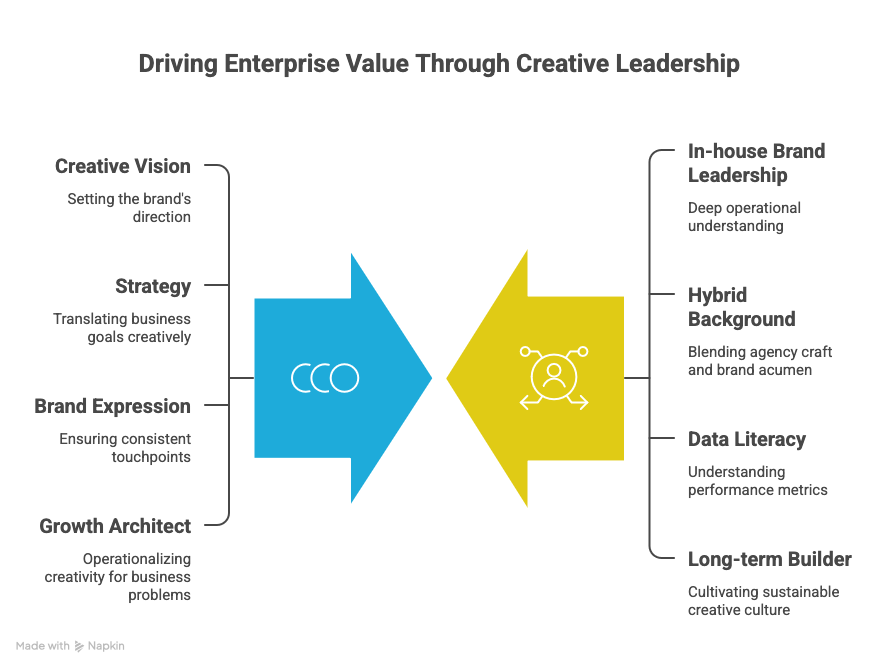
A Chief Creative Officer is the high-level executive responsible for the creative vision, strategy, and brand expression of an entire organization. Unlike a Creative Director who manages projects, the CCO translates business goals into creative intellectual property, ensuring that every touchpoint - from product design to marketing drives measurable enterprise value and long-term growth.
For years, the CCO was seen as the "vibes" officer. No more.
Today’s CCO must act as a "Growth Architect." According to the 2024 LIONS State of Creativity report, brands that prioritize creativity are 6x more likely to achieve higher growth than their competitors.
This means your job is no longer just "making things look good"; it’s about operationalizing creativity to solve complex business problems.
Also Read: Chief Business Officer Salary: Pay, Equity, & Negotiation Insights
Do I need to stay in an agency to reach the C-Suite?
No, the path to the CCO role is increasingly shifting toward "in-house" brand leadership. While agency experience provides a diverse portfolio, many modern CEOs prefer CCOs who understand the deep operational mechanics of a single brand. Success now requires a "hybrid" background that blends agency-level craft with brand-side business acumen and data literacy.
Research from Jobtrees shows that CCOs now stay in their roles for an average of 7.4 years, which is significantly longer than many other C-suite titles.
This suggests that organizations are looking for "long-term builders" rather than "campaign hoppers."
Whether you are refining your creative leadership in a boutique firm or a tech giant, the key is showing you can build a sustainable creative culture, not just a viral stunt.
Also Read: Top 25 Leadership Skills You Need to Succeed in Your Workplace
How do I bridge the "Boardroom Gap"?
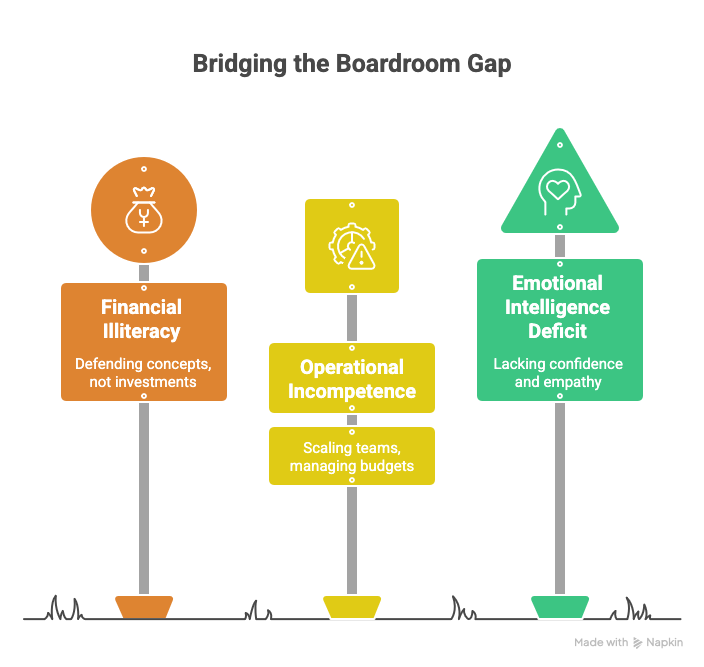
You bridge the boardroom gap by becoming fluent in "CEO-speak," which is essentially the language of ROI and risk mitigation. Start by attending financial meetings, learning to read a balance sheet, and understanding how creative decisions impact the company’s stock price or EBITDA. You must transition from defending a "concept" to defending a "commercial investment."
A major tension exists between creatives and the C-suite. The Cannes Lions study found a "communication breakdown" where 51% of brands are optimistic about growth, yet their creative partners feel disconnected from the business strategy.
To close this, you need to prove that creativity isn't a cost center.
According to research by Forrester, firms that exhibit high levels of creativity grow 2.6 times faster than their peers. Use these stats to justify your seat at the table.
Also Read: How can you get buy-in for your ideas and stand out at work?
What leadership skills are missing in most Creative Directors?
The biggest missing skills are operational management and emotional intelligence (EQ). Most Creative Directors are promoted because of their craft, but the Center for Creative Leadership notes that 60% of managers receive zero training when transitioning into leadership roles. A CCO must master "Design Ops" - the ability to scale creative teams, manage budgets, and optimize workflows.
According to the Rotman School of Management, "excellence is the price of admission," but emotional intelligence is what keeps you in the C-suite.
You need to develop executive presence - a combination of confidence, empathy, and the ability to influence people who don't report to you.
If you can’t convince the CFO that a brand refresh is worth $2M, your talent as an artist is irrelevant.
How should I format a C-level resume?
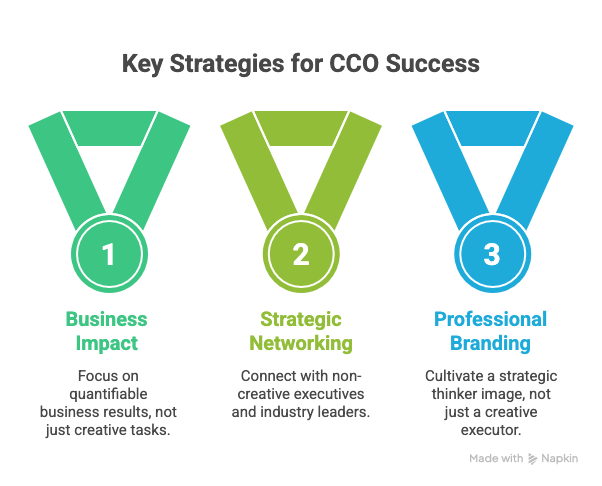
A C-level resume must focus on "Business Impact" rather than "Project Tasks." Instead of listing awards, highlight how your creative direction led to a specific percentage increase in market share or customer retention. Use active, power-driven language to describe how you managed multi-million dollar budgets and cross-functional teams to achieve organizational milestones.
Your executive resume should look less like a portfolio and more like a strategy document.
While your creative portfolio proves you can do the work, your resume must prove you can lead the company.
How do I build a network that actually leads to CCO roles?
C-suite networking happens in rooms where you are the only "creative." Instead of hanging out exclusively with other designers, join industry boards, attend non-creative executive summits, and find mentors in Finance or Operations. You want to be the person other executives call when they have a business problem that requires a non-linear, creative solution.
According to Egon Zehnder’s 2024 CEO Response study, 92% of CEOs believe they must cultivate unprecedented levels of adaptability.
They are looking for CCOs who can act as "creative advisors" during times of volatility.
Building your professional brand as a strategic thinker, not just a creative executor, is the fastest way to get headhunted for these top-tier roles.
What is the average salary of a CCO in 2026?
The median pay for top-level creative executives currently sits around $184,000 to $250,000+, depending heavily on the industry and company size. In high-stakes sectors like motion pictures or video industries, the Bureau of Labor Statistics reports that top creative leaders can earn significantly more, with median wages for related roles exceeding $133,000 even at lower tiers.
The job outlook for creative leadership is steady, but the competition is fierce. To stay relevant, you must be a "perpetual student" of technology.
Whether it's mastering AI-driven workflows or understanding the ethics of generative design, the CCO of the future is as much a Creative Technologist as they are a storyteller.
Also Read: How can a Creative Director craft a resume that quickly stands out to recruiters?
Wrapping Up
Stepping into roles like a CCO isn’t just about creative excellence, it’s about consistently proving business impact, communicating value, and positioning yourself as a strategic leader.
That shift shows up everywhere, including how you present your experience, tell your story, and prepare for high-stakes conversations.
As you work toward that transition, having the right support system can make the process more structured.
Hiration can help you translate your work into measurable impact through ATS-friendly resumes, sharpen your LinkedIn narrative for leadership roles, and practice interviews with targeted feedback - so you’re not figuring it out from scratch each time.
When your positioning matches the level of roles you’re aiming for, opportunities start aligning much faster.
Chief Creative Officer Career Guide — FAQs
What does a Chief Creative Officer do?
A Chief Creative Officer leads the overall creative vision, strategy, and brand expression of an organization. The role connects creative work to business goals, growth, and long-term enterprise value.
What is the difference between a Creative Director and a Chief Creative Officer?
A Creative Director usually manages campaigns, teams, or projects, while a Chief Creative Officer operates at an executive level and shapes how creativity supports business strategy across the company.
Do you need agency experience to become a Chief Creative Officer?
No. Agency experience can help build range, but many companies now value leaders with in-house brand experience, operational understanding, and the ability to grow one brand over time.
What skills are most important for becoming a Chief Creative Officer?
The most important skills include creative leadership, business acumen, operational management, executive communication, emotional intelligence, budgeting, and the ability to tie creative work to measurable outcomes.
How can creative leaders become more credible in the boardroom?
They need to speak in terms of ROI, growth, risk, and business impact. That means understanding financial metrics, showing how creative decisions affect results, and presenting ideas as commercial investments rather than just concepts.
What leadership skills are often missing in Creative Directors?
Many Creative Directors need stronger skills in team operations, workflow design, budget management, stakeholder influence, and executive presence to succeed at the CCO level.
How should a Chief Creative Officer resume be written?
A C-level resume should focus on business impact, leadership scope, growth outcomes, and strategic influence. It should show how creative decisions improved market position, brand performance, or revenue-related results.
How do professionals build a network that leads to CCO roles?
They should build relationships beyond the creative community by connecting with leaders in operations, finance, product, and executive leadership. That broader network increases visibility for strategic leadership opportunities.
What is the average salary of a Chief Creative Officer?
Chief Creative Officer salaries often range from around $184,000 to $250,000 or more, depending on the company size, industry, and level of responsibility.
What does the career path to Chief Creative Officer usually look like?
The path often starts in design, copy, brand, or creative roles, then moves through leadership positions such as Associate Creative Director or Creative Director before expanding into executive-level strategy and cross-functional business leadership.